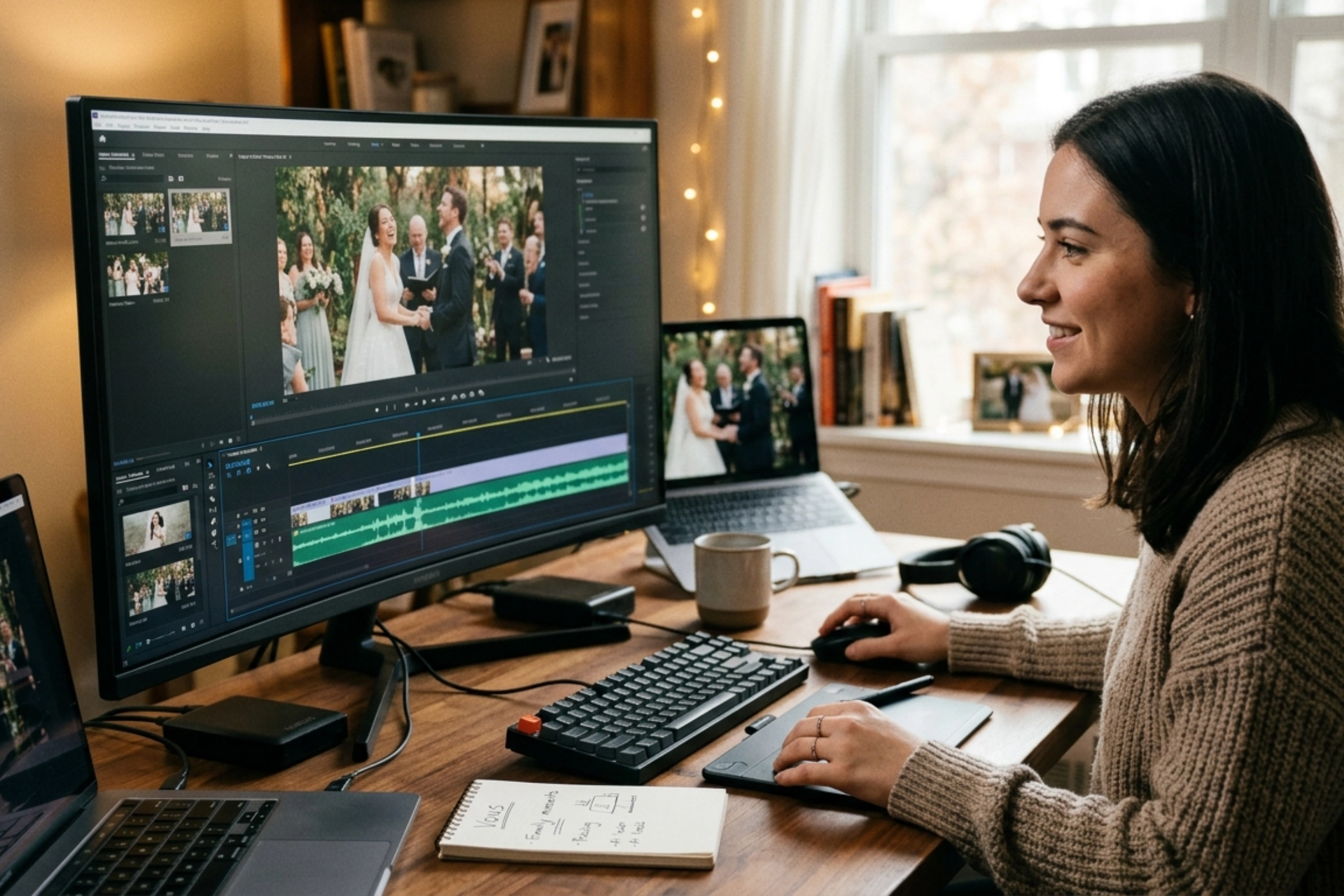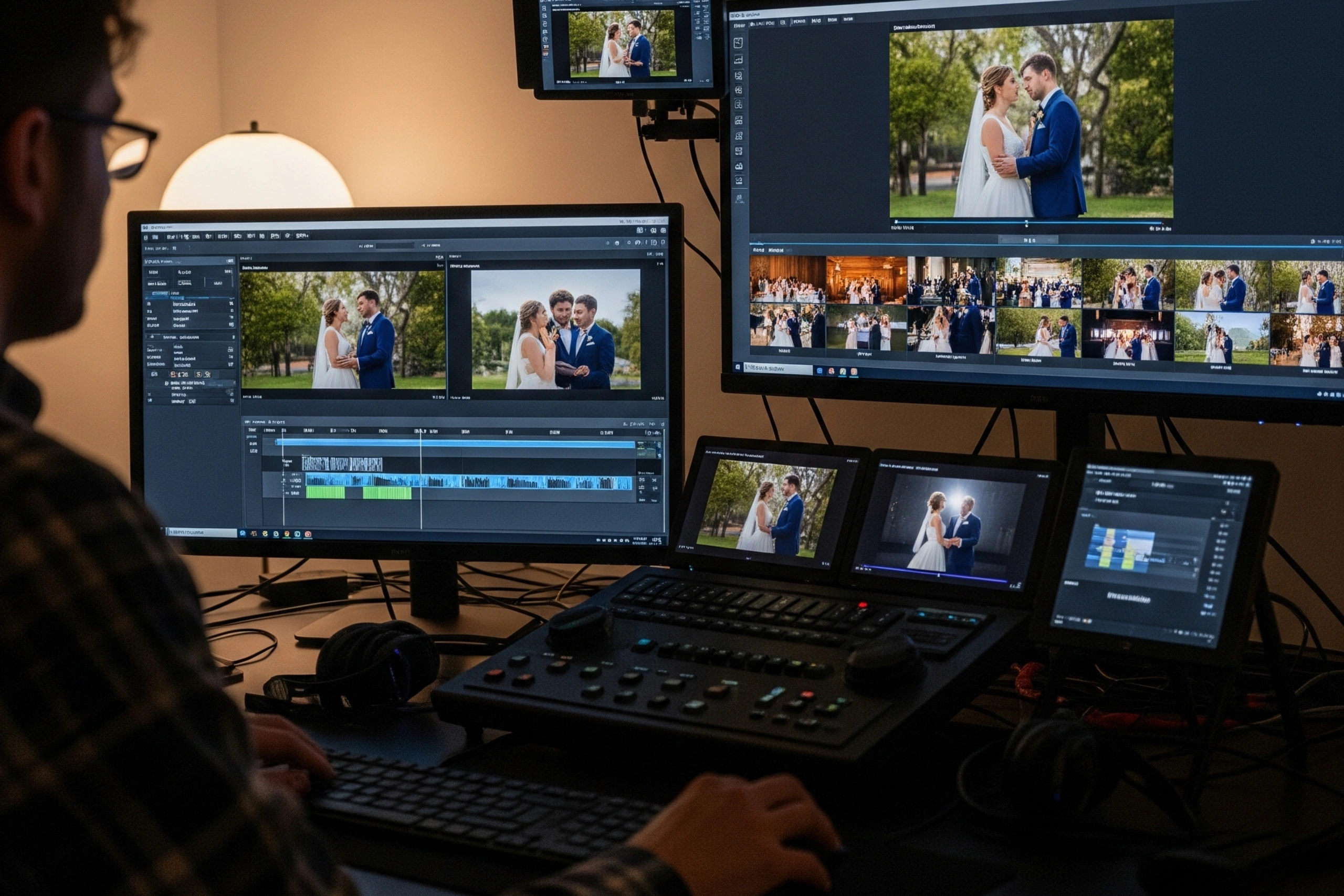
Wedding films have upped the game. It has become way more like movies with all the cinematic shots and emotions that tell a story without uttering a word. But as the couple demands such high-quality content with high-quality footage, it also creates a massive technical challenge for videographers. Most U.S. wedding videographers now shoot in 4K 10-bit footage, LOG profiles, High frame rates like 60 fps or 120 fps, Multi-camera setups, and Drone footage. Due to this, the editing workload has become significantly heavier. The Videographer alone cannot manage shooting and Wedding video editing simultaneously.
When several cameras and drones are used, a single wedding can easily produce 700 GB to 1.5 TB of footage. Even on powerful systems, editing these files directly frequently results in sluggish timelines, slow rendering, stuttering playback, and frequent crashes.
Proxy editing workflows are used by seasoned wedding video editors and professional studios for precisely this reason.
Proxy-based systems are now an essential component of Motion Edits’ ability to provide videographers throughout the United States with quicker, more seamless, and more scalable wedding video editing services.
Why 4K Wedding Footage Creates Editing Problems
The majority of contemporary mirrorless and cinema cameras capture extremely compressed codecs, which are aesthetically pleasing but very taxing on editing systems.
For example:
- Sony FX3 footage in 4K 10-bit
- Canon C70 XF-AVC files
- DJI drone footage
- Slow-motion H.265 formats
When playing these formats, a lot of processing power is needed. Editing software finds it difficult to process multiple layers, transitions, color grading, and audio effects in real time.
This slows down Timeline scrubbing, Multi-camera playback, Audio syncing, color grading, and export rendering
Even a few seconds of lag, repeated hundreds of times per project, becomes a significant productivity issue for professional wedding videography editing.
What Is Proxy Editing?
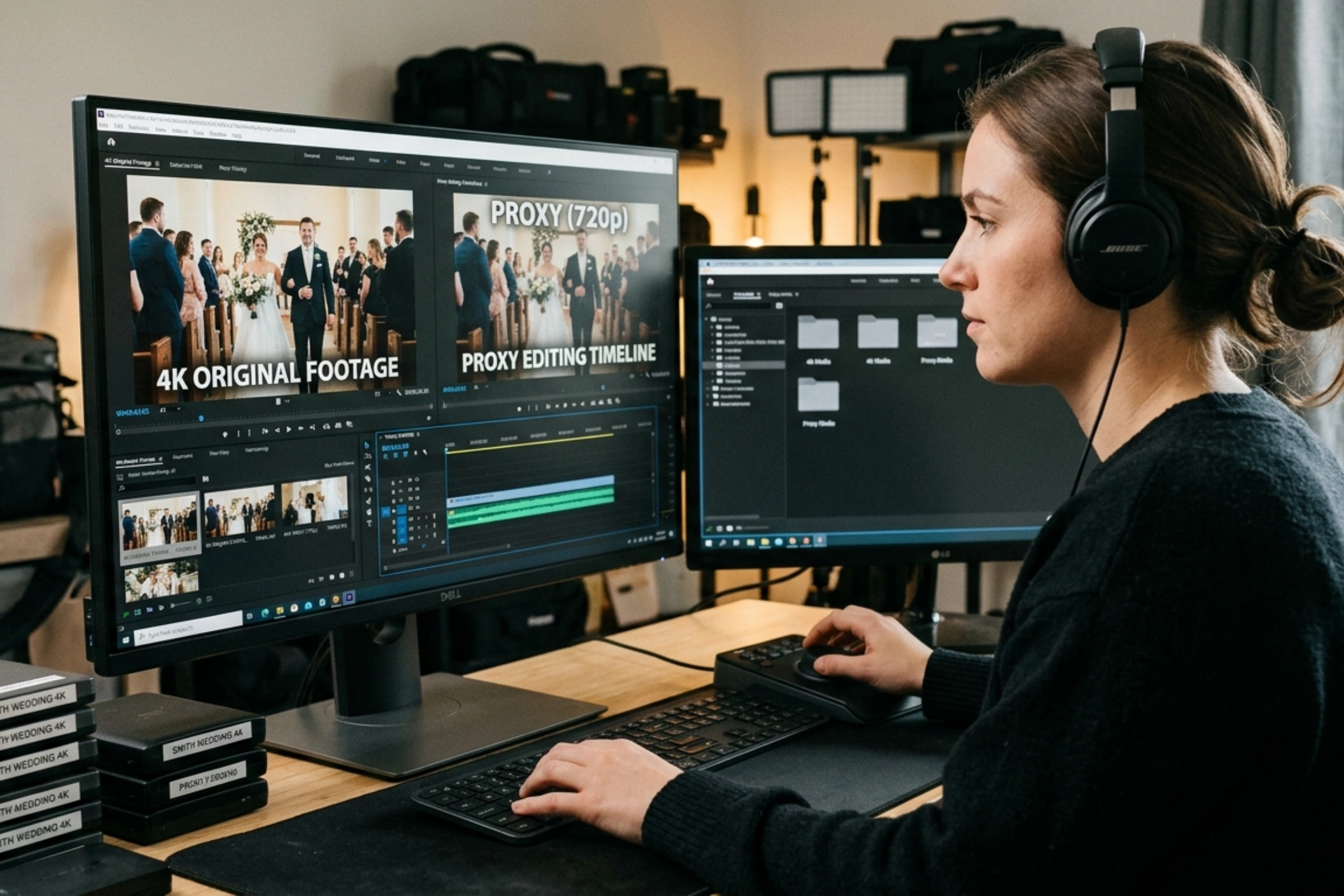
Lower-resolution copies of the original video are produced by proxy editing. Editing software can process these lightweight files much more easily.
Editors use optimized proxy versions instead of directly editing large 4K RAW or 10-bit files while maintaining a connection to the original, high-quality footage.
The program automatically reconnects the original files for final export after the edit is finished.
This means faster playback, smoother editing, less lag, faster multi-cam performance, and more stable timelines.
Instead of constantly battling technical hiccups, a professional wedding film editor can focus on the narrative.
How Proxy Workflows Save Hours During Wedding Editing
At Motion Edits, we observed that playback delays, rendering interruptions, and slow timelines were costing editors eight to ten hours per wedding project.
After implementing optimized proxy workflows, timeline responsiveness improved by nearly 60%, multi-cam editing became significantly smoother, crash frequency reduced dramatically, and export errors decreased.
This made it possible for editors to finish projects more quickly without sacrificing cinematic quality.
These workflow enhancements become crucial for high-volume studios that handle 15–30 weddings every month.
Why Multi-Cam Wedding Editing Benefits Most from Proxies
Modern weddings often involve 3–5 camera angles, drone footage, external audio recorders, and ceremony cameras running continuously.
During wedding movie editing, all these angles must be synchronized into a single multi-cam timeline.
Real-time playback can become practically impossible without proxies, particularly when layered color grading and effects are involved.
By significantly lowering system stress, proxy editing enables editors to smoothly transition between camera angles while preserving real-time playback.
This enhances creative flow and speed for a professional wedding video editor.
Color Grading Becomes More Efficient
Cinematic color grading is used extensively in wedding films. However, real-time grading of several 4K camera formats can cause systems to lag considerably.
Proxy workflows help editors preview LUTs faster, navigate timelines smoothly, match camera colors efficiently, and apply corrections without lag.
Proxy-based grading pipelines at Motion Edits cut the average grading time per wedding project by about 25–30%.
This helps studios maintain quicker delivery schedules while also increasing consistency.
How Motion Edits Uses Proxy Workflows for Scalable Editing
Motion Edits consider Proxy editing as infrastructure rather than a shortcut.
Automated proxy creation, well-organized folder structures, shared editing pipelines, efficient storage management, and multi-platform export presets are all part of our workflow.
This enables our team to effectively oversee extensive outsourced wedding video editing projects while preserving a constant level of cinematic quality.
For videographers, this means more project capacity, quicker turnaround times, fewer editing bottlenecks, and less burnout during busy times.
Above all, it produces a scalable editing system instead of a disorganized workflow.
Why Technical Workflows Matter for Business Growth
According to many wedding videographers, scaling depends on filming more weddings. In reality, scaling actually depends on how well weddings are processed. More reservations just lead to more stress if workflows aren’t optimized. Proxy editing helps remove one of the biggest technical bottlenecks in modern wedding videography editing.
To combine cinematic storytelling with operational efficiency, many expanding studios now work with expert wedding video editing services like Motion Edits. Because speed and consistency are just as important in today’s market as creativity.
Manage Your Work Smartly With Motion Edits
Proxy editing may sound technical, but its impact is simple: Faster delivery is the result of more efficient workflows. Effectively managing 4K footage is now essential for editing wedding films. Maintaining quality, lowering burnout, and scaling sustainably all depend on it.
Optimized proxy workflows at Motion Edits enable videographers to concentrate more on producing memorable wedding films for their clients and less on technical frustration. Because the best editing systems don’t just improve timelines. They make businesses better.
FAQs
1. What is proxy editing in wedding video editing?
Proxy editing speeds up wedding video editing processes and enhances playback performance by using lower-resolution copies of the original footage.
2. Why do wedding videographers use proxy workflows?
Proxy workflows help editors handle big 4K wedding projects more effectively by lowering timeline lag, enhancing multi-camera editing, and stabilizing playback.
3. Does proxy editing reduce final video quality?
No. The use of proxy files is limited to editing. Final exports reconnect to the original high-quality footage for full-resolution delivery.
4. How does proxy editing improve wedding film delivery time?
Wedding film editors can finish projects more quickly by using proxy editing, which speeds up playback, color grading, multi-cam syncing, and rendering.
5. How does Motion Edits use proxy workflows for outsourced wedding video editing?
Motion Edits produces cinematic wedding films more quickly and effectively by utilizing structured proxy workflows, well-organized editing pipelines, and optimized exports.