The most difficult part of YouTuber’s life is not creating ideas and executing it but to maintain the workflow with regular editing.
They target to upload one long form video in a week, then split and edit those videos to create multiple YouTube Shorts and post clips on Instagram or TikTok. While doing all these, they have to take out time to research, film and engage their audience. But there are chances of schedule collapses once editing, revisions, exports, thumbnails, captions, and shortform repurposing enter the picture. It can cause slow down in content production, breaks upload consistency, and growth. It makes them harder to sustain and work with freedom with their ideas.
This is why rapidly growing creators don’t simply “work harder.” They build systems. Creators who publish on a regular basis often rely on repeatable workflows, clear post-production steps, and support from experienced editors for YouTube. Whether you’re an influencer, podcaster, vlogger, educator, or filmmaker starting a channel, the right workflow changes can significantly increase output without forcing you to spend every night in an editing timeline.
Here are five workflow changes that help YouTubers publish faster—and why they’re important if you’re thinking about hiring a YouTube video editor or getting long-term editing help.
Check Our YouTube Video Editing Service
1. Record in Batches Instead of One Video at a Time
YouTubers treat each video as a distinct production cycle, which is one of the main reasons they publish slowly. They investigate a single concept, record a video, edit it, release it, and then begin again. Constant context-switching is produced by that method. Setup time, camera preparation, lighting inspections, audio testing, and a fresh round of editing choices are all necessary for each new upload.
That is entirely altered by batch recording. Creators group content into themed recording blocks rather than shooting a single video each session. In an afternoon, a podcaster might record three episodes. A creator making educational content might shoot four talking-head videos in one setup. During a single location day, a vlogger may record several segments and use the same footage for multiple uploads. A video editor for YouTube channel management can plan and schedule edits much more effectively once that footage enters post-production because a content pipeline is already ready.
This matters even more when a creator wants to scale Shorts. A YouTube Shorts editor can work with a lot more content from a batch-recorded long-form session than from a single isolated upload. The editor can extract several hooks, soundbites, or instructional moments from a larger batch of content and turn them into multiple Shorts simultaneously, as opposed to repurposing a single clip from a single video.
2. Build One Editing Template Instead of Starting from Scratch
It is surprising how much time is wasted repeatedly rebuilding the same structure rather than actually editing. Each upload frequently involves a manual recreation of the intro animation, lower-thirds, music beds, caption styles, transition presets, and end screens. That might be doable for creators who publish once a month. For creators trying to publish consistently, it becomes a drag on the entire system.
Reusable templates are the first step toward a quicker workflow. This entails having standardized assets for recurrent visual elements, a distinct template for short-form vertical content, and a master project structure for long-form videos. By creating timeline presets for various content types, such as podcast clips, talking-head videos, travel vlogs, tutorials, or shorts, a YouTube vlog editor or YouTube channel editor can go one step further. The editor starts with a pre-made structure that already has brand elements, default audio chains, caption styling, and platform-specific export settings rather than opening a blank timeline each time.
Time is not the only thing this saves. Additionally, it enhances consistency. One of the best things creators can look for when searching for a YouTube video editor is someone who can create an editing system rather than just complete a single video. Instead of requiring a new creation for each upload, templates make editing a repeatable process.
3. Edit Long-Form and Shorts from the Same Source Workflow
YouTube Shorts are still viewed by many creators as “extra content” that can be produced at a later time if time permits. One of the main causes of Shorts’ inconsistent output is this. The short-form opportunities in the long-form video are overlooked because the creator is already working on the next project by the time it is completed.
Planning both long-form and short-form editing at the same time is a much faster method. In practice, this means that when the main video is being reviewed, the editor is also flagging moments that could become vertical clips. A skilled YouTube Shorts video editor is aware of what to look for, such as a bold statement within the first five seconds, an instructive moment, an unexpected reaction, a before-and-after transformation, a brief behind-the-scenes reveal, or a humorous line that works out of context.
The creator produces more work without filming more content when shorts are created from the same workflow rather than as an afterthought. This is one of the main benefits of using a full-service editing partner or a video editor for YouTube Shorts. Several short-form pieces for YouTube Shorts, Reels, and TikTok can be created from a single long-form upload. This increases the publishing calendar’s perceived size without adding to the recording load.
This is frequently the workflow modification that has the largest effect on reach for podcasters, influencers, and videographers.
4. Separate Creative Decisions from Technical Post-Production
Because they personally handle every technical editing task, even when those tasks don’t require their creative input, many creators waste time. They spend hours troubleshooting render settings, creating subtitles, formatting exports, resizing clips for vertical delivery, cleaning audio, and syncing multiple cameras. All of that is crucial, but the creator doesn’t have to do it all.
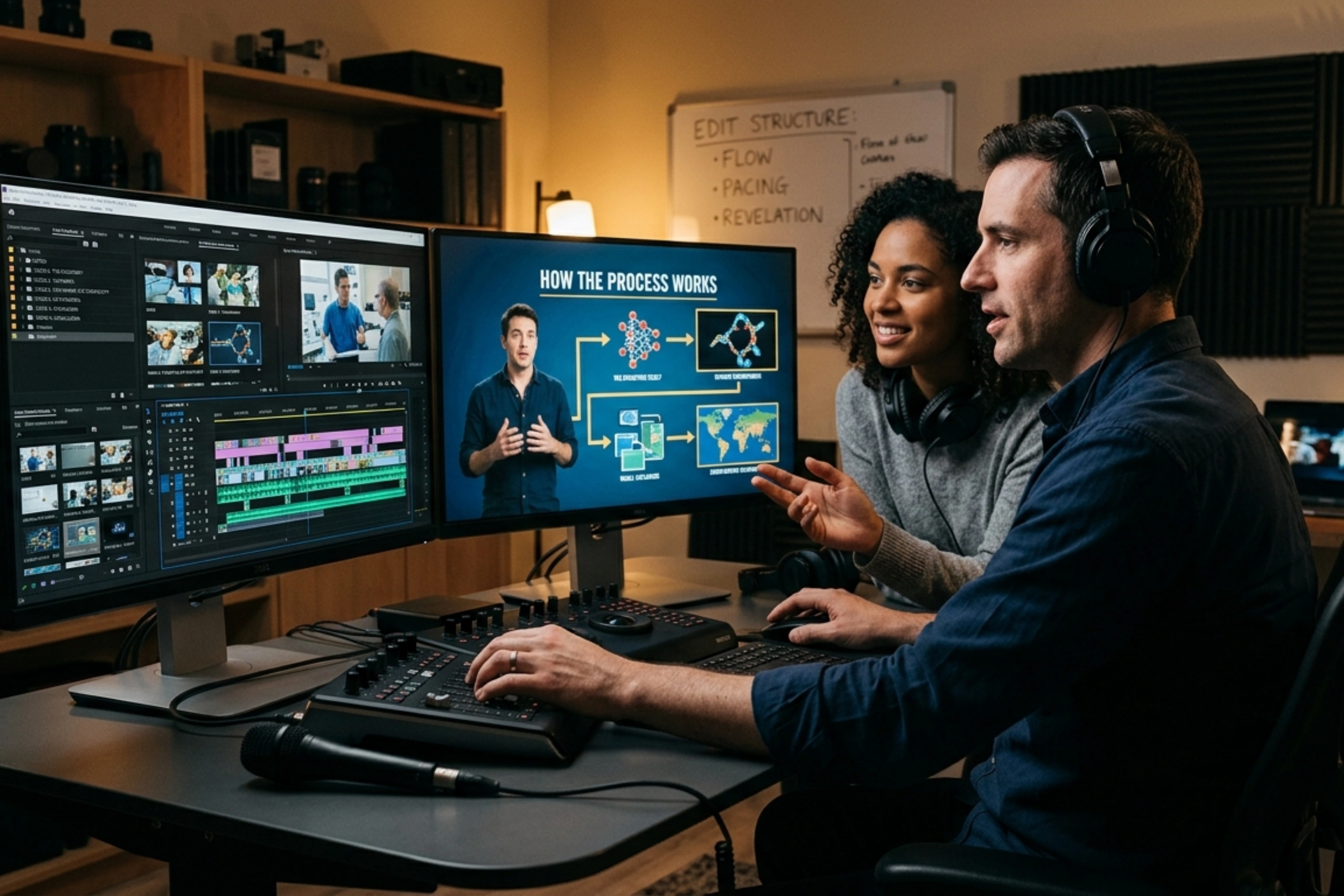
Separating technical execution from creative direction is the quicker model. The creator concentrates on the aspects that only they are capable of: choosing a topic, writing the script, performing, getting final approval, and setting the tone for the brand. The technical aspect of post-production is managed by the editor. Timeline assembly, silence cleanup, color correction, multi-cam sync, lower-thirds, sound balancing, caption formatting, and platform-specific exports are a few examples of this.
For this reason, more YouTubers looking for editors are not merely hiring someone to “cut clips.” They are searching for someone who can eliminate the technical obstacles that cause publishing to lag. Instead of turning into a full-time post-production operator, a professional YouTube video editor for hire assists the creator in maintaining their creative role. The same is true for wedding videographers creating instructional YouTube channels to draw in customers or podcasters who want episodes to be clipped more quickly. The goal is not just to outsource labor—it is to protect time and focus.
5. Turn Editing Into a Weekly Pipeline, Not a One-Off Task
The primary distinction between creators who publish infrequently and those who do so regularly is that the latter approach content as a pipeline. Planning, production, editing, and publication are all ongoing processes. Rather than occurring in discrete bursts, the work overlaps.
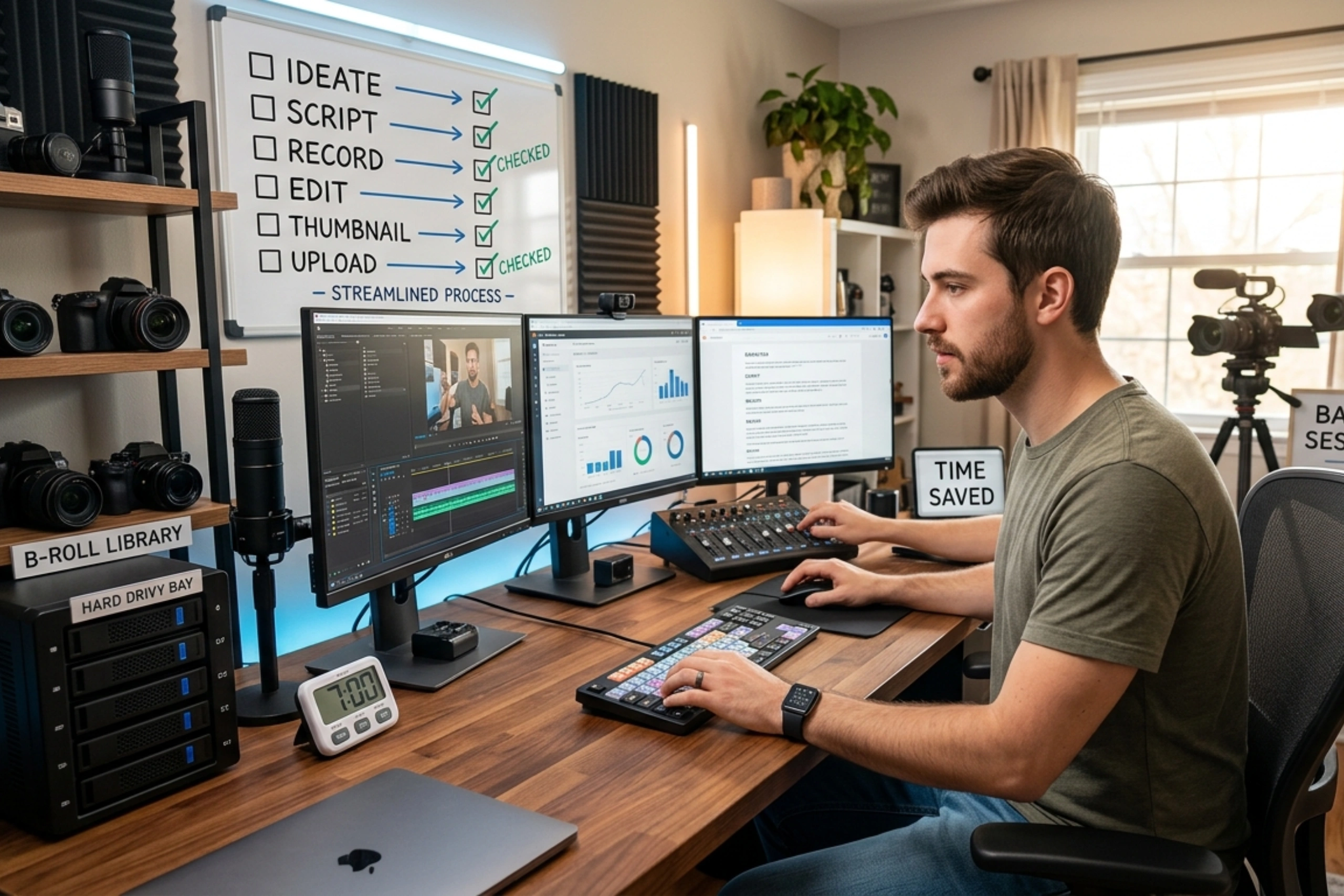
Monday is scripting and planning, Tuesday is batch filming, Wednesday is the first round of editing, Thursday is review and shorts extraction, and Friday is publishing and scheduling. This is an example of a weekly pipeline. The creator doesn’t have to stop working every time an upload needs to be completed when YouTube channel editors support that system. Because editing, clipping, and formatting are already a part of a regular production rhythm, the channel continues to flow.
For creators who wish to post in multiple formats, this is very important. A podcaster might require guest promo clips, shorts, and complete episodes. A videographer may require vertical highlights, equipment reviews, and YouTube tutorials. In addition to branded short-form content, an influencer might want weekly vlogs. Every upload feels urgent in the absence of a pipeline. A pipeline makes publishing predictable.
Because of this predictability, YouTube creators begin collaborating with editors on a long-term basis instead of hiring freelancers on an as-needed basis.
Why These Workflow Changes Matter for Growth
Publishing twice as fast is not just about output. It changes what a channel can become.
More uploads mean more chances to test ideas, more opportunities to rank in search, more clips to distribute across platforms, and more touchpoints with an audience. More clips will encourage listeners to return to complete episodes, which is good news for podcasters. Influencers will benefit from increased visibility on YouTube Shorts and long-form. It entails establishing authority for filmmakers and videographers through case studies, tutorials, behind-the-scenes material, and portfolio narratives without allowing editing to take over the company.
More uploads result in more chances to test concepts, more search engine ranking opportunities, more clips to share across platforms, and more audience touchpoints. More clips will encourage listeners to return to complete episodes, which is good news for podcasters. Influencers will benefit from increased visibility on YouTube Shorts and long-form. It entails establishing authority for filmmakers and videographers through case studies, tutorials, behind-the-scenes material, and portfolio narratives without allowing editing to take over the company.
How Motion Edits Helps YouTubers Build a Faster Workflow
Completing videos is not the only objective at Motion Edits. The goal is to create a workflow that enables creators to publish more frequently without compromising on quality. Motion Edits supports the part of the system that typically breaks first: post-production, whether you need a long-form video editor for YouTube channel expansion, a YouTube vlog editor, or a YouTube Shorts editor.
This entails assisting creators in creating multiple deliverables from a single recording session, creating editing templates that minimize tedious work, organizing timelines for both long-form and short-form content, and managing the technical duties that impede creators’ progress. The ideal editing partner for channels looking to expand is more than just someone who can make videos look good. It is a person who expedites the flow of content through the pipeline.
Conclusion
It’s not always the case that YouTubers with the largest teams or the most expensive equipment are the ones who regularly post. They frequently have the most transparent systems.
A channel’s speed can be drastically altered by batch recording, template editing, repurposing shorts, technical delegation, and a weekly content pipeline. Additionally, publishing more content becomes a workflow decision rather than an ongoing struggle once those systems are in place.
For creators, influencers, podcasters, and videographers, that is the real advantage of working with experienced YouTube channel editors. They do more than just video editing. They help build the system that makes it possible for the channel to grow.
Check Our YouTube Video Editing Service
FAQs
1. How can a YouTube Shorts editor help creators publish more content?
Long-form videos can be transformed into several short clips using a YouTube Shorts editor, providing creators with additional content from the same footage without requiring more time to film.
2. When should I hire a YouTube video editor for my channel?
When editing begins to slow down uploads, interfere with filming, or make it difficult for you to publish regularly, you should think about hiring a YouTube video editor.
3. What does a video editor for YouTube Shorts actually do?
A YouTube Shorts video editor finds the best parts of long-form videos, reframes them for vertical viewing, adds captions, enhances pacing, and maximizes retention.
4. Can podcasters and videographers benefit from YouTube channel editors too?
Yes. While videographers can use YouTube channel editors to regularly publish tutorials, behind-the-scenes content, and branded videos, podcasters can more effectively transform episodes into clips and shorts.
5. What is the fastest workflow for YouTubers who want to post more often?
The quickest workflow typically includes batch recording, reusable editing templates, long- and short-form repurposing, outsourced post-production, and a weekly publishing pipeline.