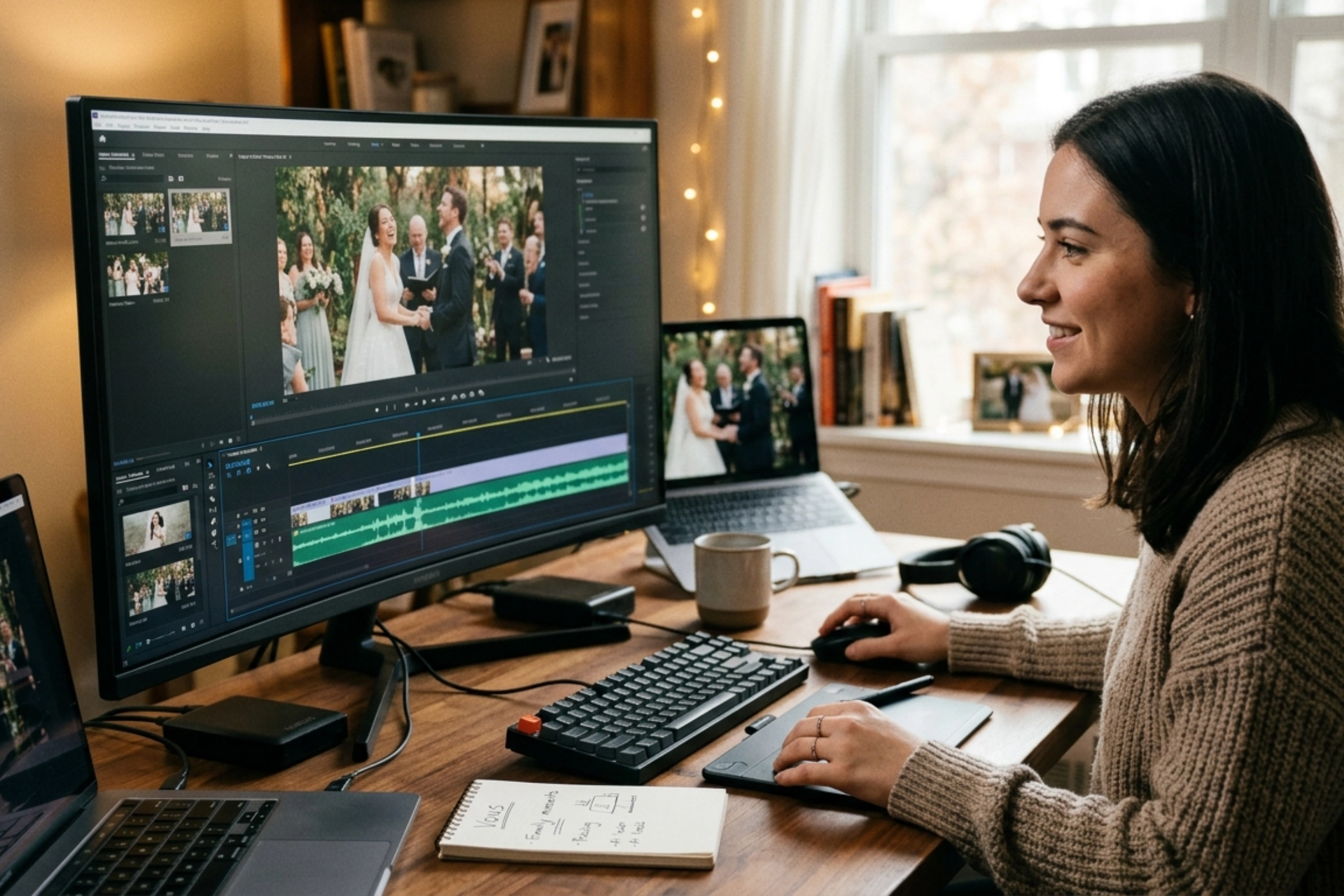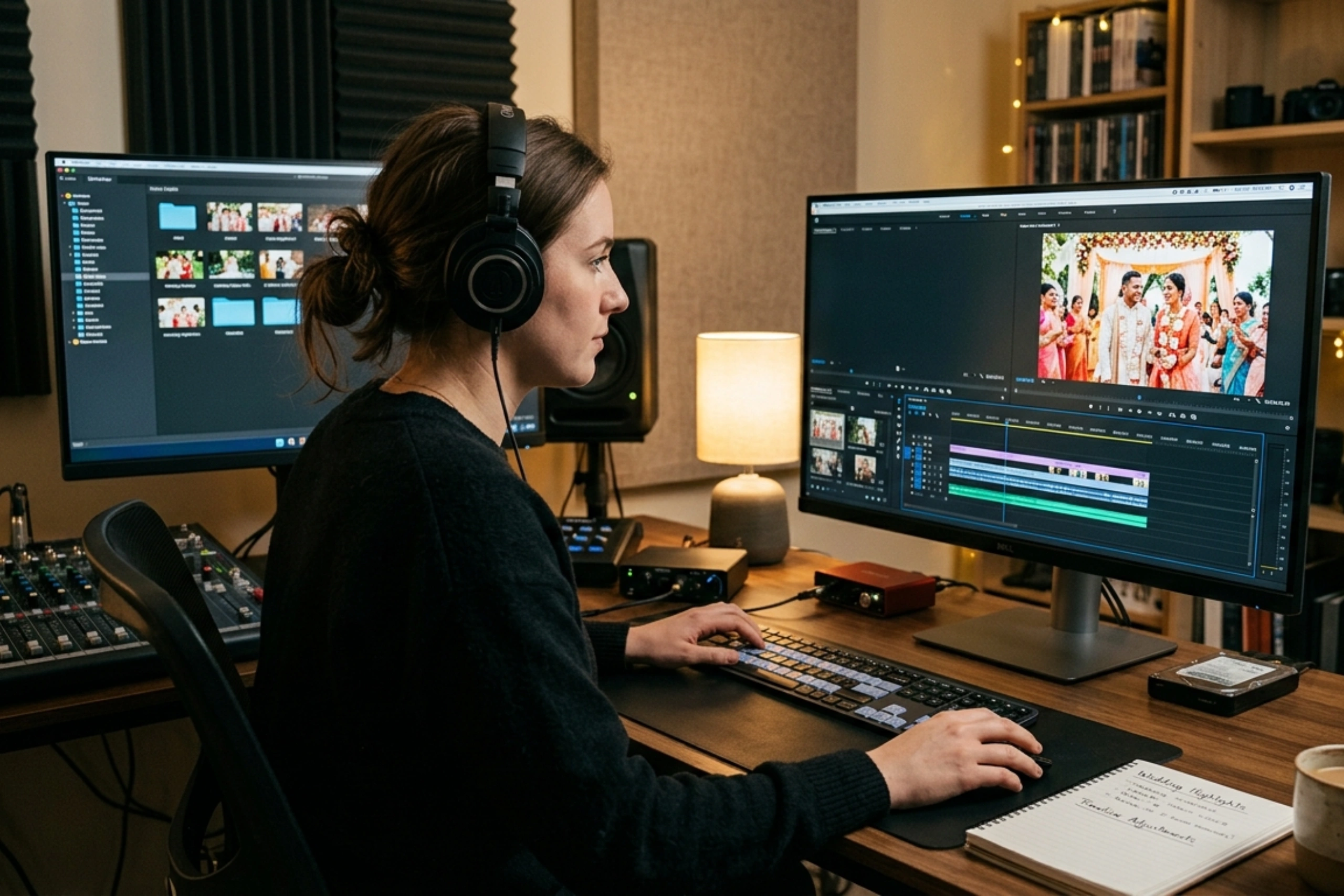
There is no better news for a wedding videography studio than growing your business with new clients. Shooting so many films in one season is so fascinating, but the real problem begins when you have 30-40 hours of post-production. It can cause many problems, such as issues with quality, professionalism, or being unable to deliver the project on time.
This is a common challenge across the wedding industry. Eventually, due to a lack of post-production capacity, delivery times increase, editors work for longer hours, and studios are forced to limit bookings.
This is where hiring a wedding video editor can make a big difference. A wedding studio can increase its overall capacity without immediately hiring and managing a larger in-house team by assigning time-consuming and repetitive post-production work to a dedicated editing partner.
Here’s how a wedding videography studio can boost capacity by up to 40% while preserving consistency and quality with a structured outsourcing model.
Check Our Wedding Video Editing Service
The Real Capacity Problem Happens After the Wedding
Wedding videography businesses often calculate capacity based on how many weddings their teams can shoot. In actuality, post-production is typically the greater limitation.
Think about a studio that records ten weddings every month. There will be 250 hours of post-production each month if each project calls for about 25 hours of wedding videography editing. The actual workload can increase significantly when you include teaser films, ceremony edits, social clips, client revisions, exports, and file management.
The result is a production bottleneck. The studio might be able to accommodate more reservations for photographers and videographers, but doing so would result in an editing backlog.
By taking charge of specific phases of the post-production process, a professional wedding video editor can partially eliminate that bottleneck. The studio should start asking, “Which parts of our workflow can we systemize and delegate?” rather than, “How many more hours can we work?”
How Outsourcing Can Create 40% More Production Capacity
Consider a wedding studio that has enough internal resources to finish ten wedding projects each month. Effective project capacity rises from 10 to 14 weddings—a 40% increase—if the team can handle four more projects in the same time frame thanks to outsourced wedding video editing.
The crucial point is that the studio’s core creative team does not necessarily need to work longer hours.
Time-consuming jobs like film organization, multi-camera synchronization, rough-cut assembly, audio alignment, cinematic storytelling, and final timeline preparation can be handled by a dedicated wedding film editor. The external team may also take care of delivery-ready exports, color correction, and sound enhancement, depending on the collaboration model.
The internal team can now devote more time to shooting, business development, client communication, and creative direction.
Although each studio will have a different capacity increase, the idea is the same: removing post-production bottlenecks frees up space for more work that generates revenue.
Building an Outsourcing Workflow Instead of Simply Sending Files
It takes more than just uploading footage and waiting for a finished film to be a successful outsourcing strategy. Together with their editing partners, the most productive studios create a repeatable workflow.
Consistent file organization is the first step in the process. Every wedding should use the same folder structure for camera footage, drone files, external audio, music references, brand assets, and editing instructions. As a result, the wedding video editor can start working more quickly and with less confusion.
Additionally, studios ought to record their artistic inclinations. Pacing, preferred transitions, color direction, music style, and the harmony between cinematic and documentary storytelling can all be conveyed through reference films.
These rules become particularly crucial for wedding film editing. Even if post-production is done by a third party, a wedding film should still feel like the work of the videographer. The goal is to create an editing system that can reliably replicate the studio’s creative identity rather than to replace it.
Technical Efficiency Makes Outsourcing More Scalable
The efficiency with which projects are transferred between teams is significantly influenced by the technical workflow involved in wedding videography editing.
For instance, proxy workflows can facilitate the transfer and editing of large 4K and 6K projects. While standardized project templates can preserve uniform timelines, frame rates, audio tracks, and naming conventions, timecode or audio waveforms can be used to synchronize multi-camera sequences.
Additionally, export presets can be made for a variety of deliverables, such as vertical content, social media teasers, full ceremony edits, and cinematic highlight films.
Editors spend less time resolving recurring issues when these technical choices are standardized. Projects proceed through post-production more consistently, which is crucial when a studio starts managing more weddings.
Professional wedding video editing services can be more beneficial in this situation than just finishing individual projects. The ideal partner joins the production infrastructure of the studio.
Faster Turnaround Can Improve the Client Experience
While expanding capacity is important, delivery quality should never be sacrificed in the process.
In fact, outsourcing can speed up turnaround times when done properly. Shortly after the wedding, footage can go into post-production rather than spending weeks in an internal editing queue.
A quicker delivery can enhance the customer experience in general. Videographers spend less time responding to inquiries about postponed projects, and couples receive their films while the wedding is still fresh in their minds.
Additionally, prompt delivery can generate marketing opportunities. Couples may be more inclined to share teaser films or highlights while friends and family are still actively consuming wedding-related content if they receive them earlier.
Thus, effective wedding film editing benefits the studio’s operations and client base.
Why Outsourcing Is a Growth Strategy, Not Just a Time-Saving Tactic
When they are overworked during the busiest wedding season, many videographers first think about outsourcing. However, using outsourcing proactively presents a greater opportunity.
Studios can accept new bookings with more confidence when they have a dependable post-production system. The company can plan capacity around a scalable workflow rather than worrying about how the editing team will manage another hectic month.
Reducing reliance on a single internal editor is another benefit of using professional wedding video editing services. An established outsourcing relationship offers extra production flexibility if one employee becomes unavailable or the studio unexpectedly receives more projects than anticipated.
This enables entrepreneurs to devote more time to tasks that directly contribute to expansion, such as cultivating relationships with vendors, enhancing customer satisfaction, creating premium packages, producing marketing materials, and scheduling new weddings.
Conclusion
A wedding videography studio shouldn’t have to refuse new clients just because there isn’t enough time.
By building a structured outsourced wedding video editing workflow, studios can remove one of the biggest constraints on growth. While the internal team can continue to maintain creative direction and client relationships, a professional wedding film editor can handle time-consuming and technically challenging post-production tasks.
That operational change amounts to a 40% increase in capacity for a studio going from 10 to 14 finished projects per month, all without requiring the core team to put in 40% more hours.
Therefore, having someone else edit the video is not the true benefit of outsourcing. It is developing a post-production system that enables the company to expand beyond the constraints of its current editing hours.
The right editing collaboration with Motion Edits can transform post-production from a bottleneck into an engine for long-term growth for wedding videographers who are prepared to scale.
Check Our Wedding Video Editing Service