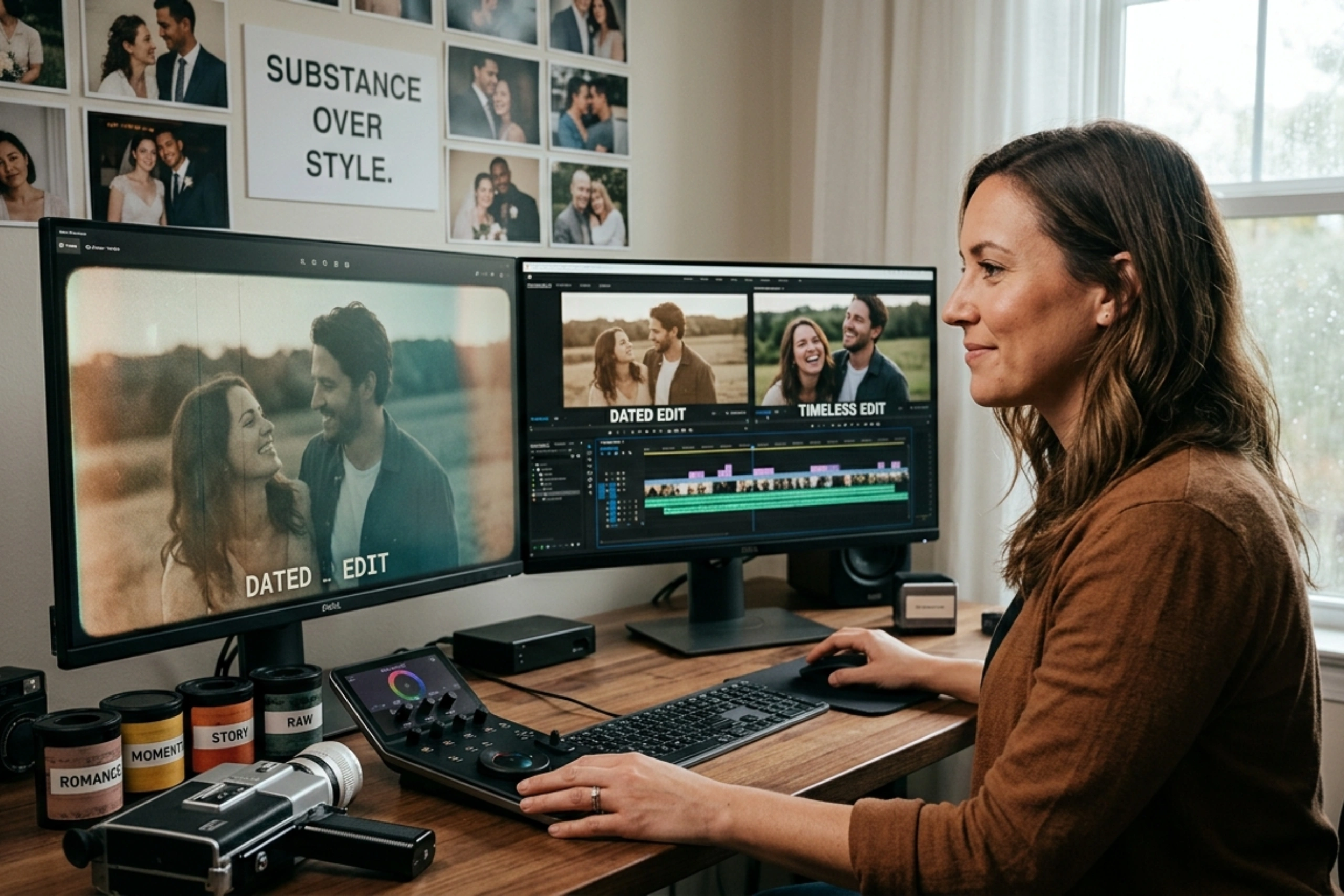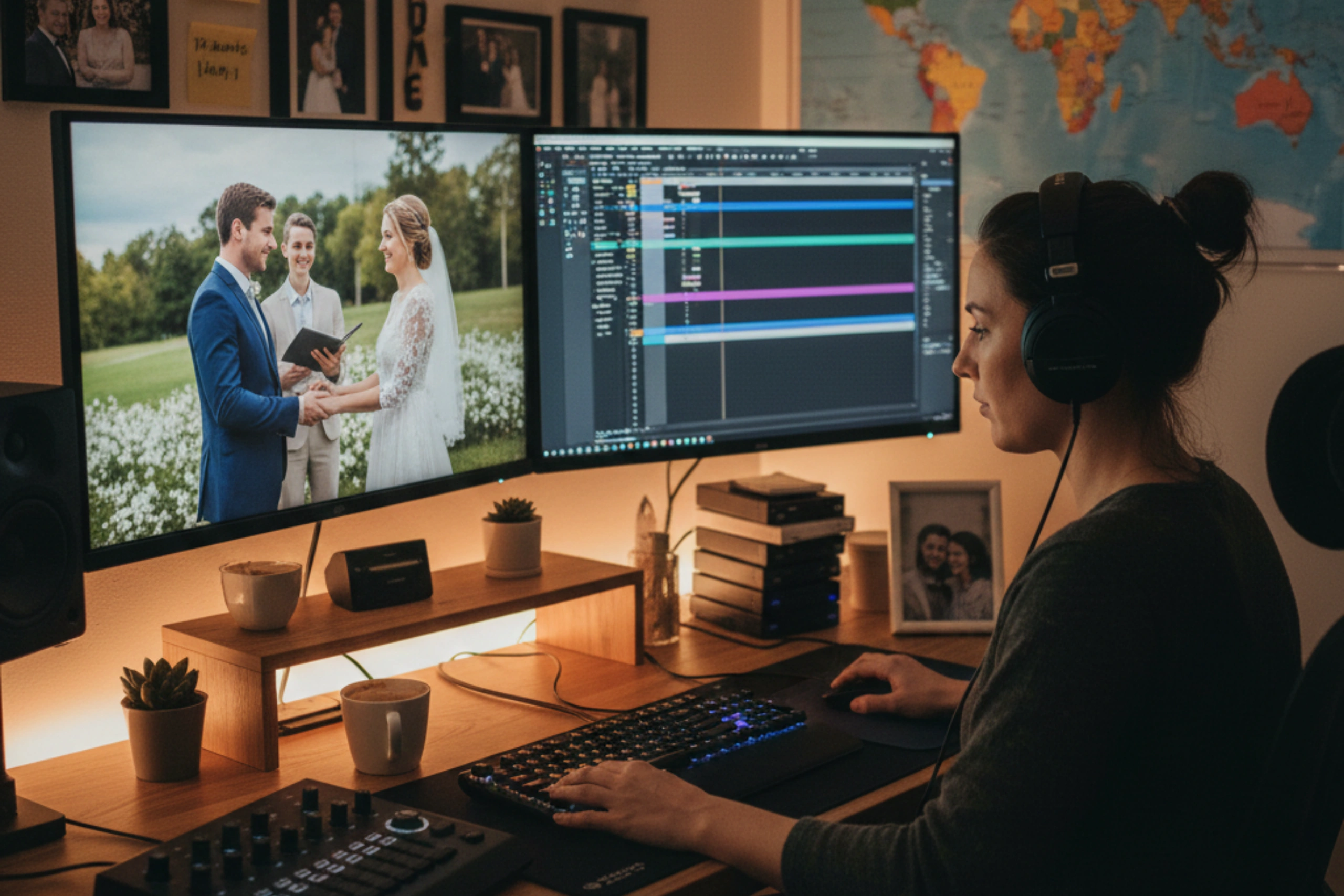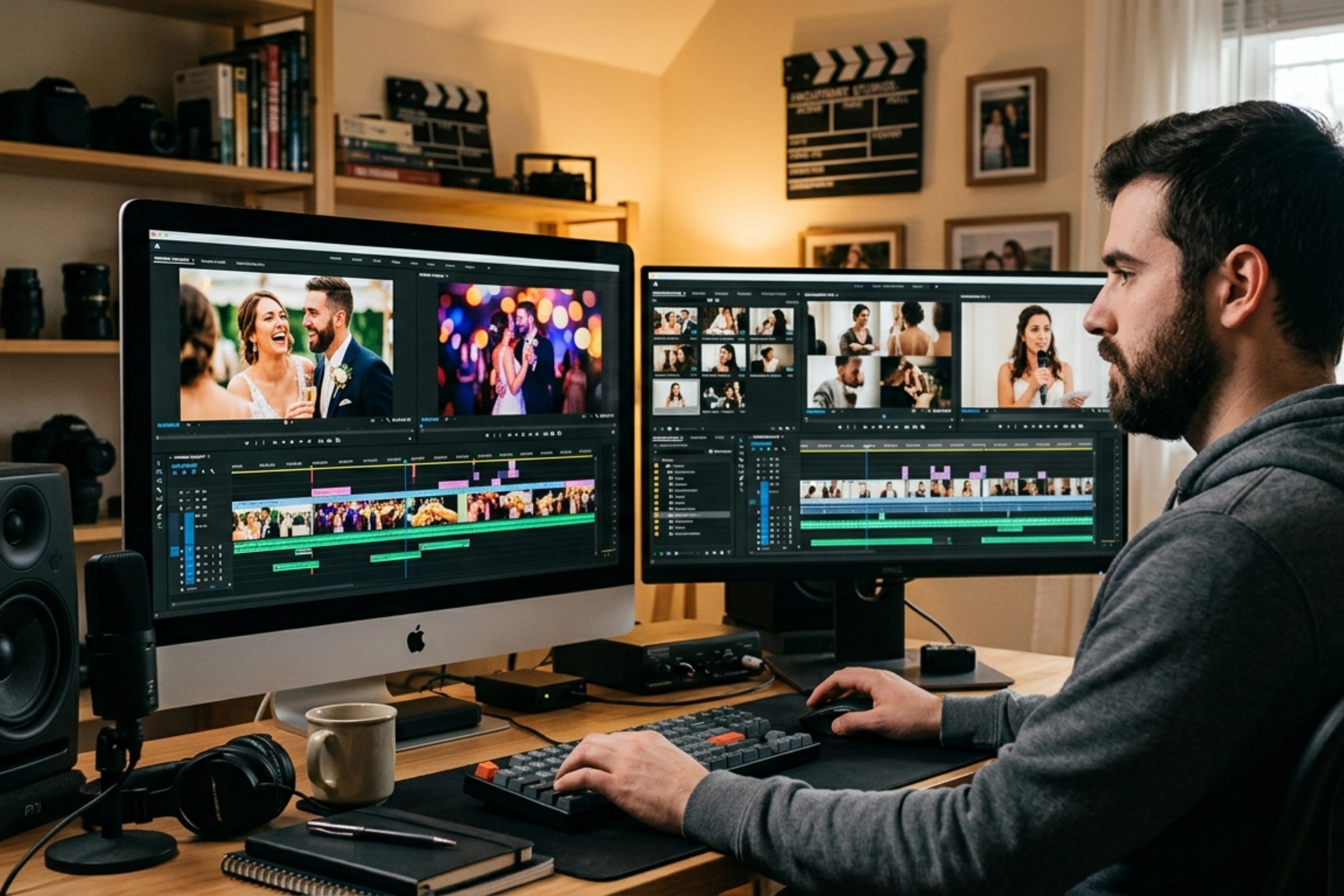
The videographer takes the same kind of shots for a wedding highlight and a documentary film. Multi-camera footage, vows, speeches, candid moments, and cinematic visuals are necessary. When it comes to editing, the whole style and process change. The editor’s priorities change significantly depending on the final deliverable, which also depends on the couple’s demands.
When planning packages, timelines, and post-production workflow, wedding videographers must understand this difference. They must give the client information about the different possibilities and styles of wedding video editing. The Motion Edits’ professional wedding video editor approach each format with a different storytelling structure, pacing, audio strategy, and editing philosophy. Let us discuss wedding highlights and documentary film in detail.
Explore Our Wedding Video Editing
What Is a Wedding Highlight Film?
Typically, a highlight film is a condensed, narrative-focused version of the wedding day. It could last anywhere from a few minutes to ten to fifteen minutes, depending on the videographer’s package.
Documenting every event is not the aim of this wedding videography editing. Rather, the editor connects the most powerful cinematic and emotional moments into a condensed story.
The couple’s vows or a stirring passage from a speech could serve as the emotional cornerstone for a wedding film editor, who would then surround that audio with preparation footage, ceremony reactions, portraits, details, and reception moments. Because emotional storytelling is more important than recording the precise sequence of events, the chronology can be flexible.
It is approximately 5 to 15 minutes of wedding video highlights, which gives a glimpse of the whole wedding.
What Is a Documentary Wedding Film?
A documentary film adopts an alternative strategy. It seeks to preserve more of the wedding experience rather than condensing it into its most dramatic moments.
Longer segments of vows, speeches, ceremony proceedings, reception activities, and casual conversations may be included in a documentary edit. Because viewers must comprehend what happened and when, continuity becomes especially crucial.
This means that when editing wedding footage, the editor must devote more time to preserving chronological order, synchronizing multiple cameras, cleaning up dialog, and selecting angles that preserve the event without unduly interfering with it.
The goal is to create a comprehensive audiovisual record of the wedding rather than a brief emotional montage.
It is a 30- to 120+ minute-long edited version, which covers every aspect of the wedding in detail.
How the Editing Workflow Changes
The biggest difference is selection versus preservation.
An editor may go over several hours of footage and choose just a few seconds from a specific scene for a highlight film. Several minutes of the same event may be preserved in a documentary edit.
The entire workflow is altered as a result. A thorough footage selection, story development, music synchronization, pacing, and imaginative cutting are important for highlight editing. Continuity, multi-camera synchronization, dialog clarity, and long-form timeline management are all more important in documentary editing.
For example, a highlight editor might use a few seconds of the vows during a ceremony, followed by the groom’s and a parent’s emotional reactions. To maintain visual interest, a documentary wedding film editing workflow might maintain the entire vows while alternating between camera angles.
Audio Plays a Different Role in Each Format
In both formats, audio is crucial, but its function varies.
Dialog is frequently edited selectively to tell a story in a highlight film. A few strong phrases from speeches or vows can link otherwise disparate images.
The original dialog bears greater responsibility when it comes to documentary editing. Editors must speak clearly while maintaining the natural atmosphere of the room, laughter, applause, and music.
Because of this, audio synchronization is especially crucial when there are several cameras and external recorders.
Why Professional Wedding Video Editing Services Matter
Because of these variations, post-production can be difficult for studios making both documentaries and highlights. After filming a wedding, a videographer might have to produce multiple entirely distinct edits from the same footage.
This is where hiring a third party to edit wedding videos can be beneficial. Instead of using a single general editing style for every project, a professional editing partner can oversee various workflows based on the deliverable.
This can free up the videographer to expand studios and focus on filming, communicating with clients, and making new reservations while skilled editors take care of the intricate post-production work.
Choosing the Right Workflow for Your Brand
There is no fundamental difference between the two formats. A documentary film puts more emphasis on completeness, continuity, and preservation than a highlight film, which aims to create an emotional, cinematic experience in a shorter time.
What the client is purchasing and whether the post-production process is built around that promise are crucial questions for wedding videographers.
Both formats can use entirely different technical and narrative techniques while maintaining a consistent creative identity with the correct wedding video editing services.
Conclusion
The final video’s duration is not the only distinction between a documentary film and a wedding highlight. It has to do with how the editor handles the video.
Highlight editing asks: “What are the most meaningful moments, and how can we tell their story?”
Documentary editing asks: “How can we preserve the experience while making it engaging to watch?”
Videographers can develop better packages, realistic delivery expectations, and more efficient post-production systems by being aware of this distinction.
Explore Our Wedding Video Editing
FAQs
1. What is the difference between a wedding highlight film and a documentary film?
A wedding highlight film is typically shorter and concentrates on specific poignant and dramatic moments. Longer segments of the ceremonies, vows, speeches, and reception events are preserved in a documentary wedding film.
2. Does a documentary wedding film take longer to edit?
Yes, most of the time. Longer timelines, more footage preservation, intricate multi-camera synchronization, dialog editing, and continuity management are all common components of documentary editing. The volume of footage and deliverables determine the precise editing time.
3. How do wedding editors create emotional highlight films?
A professional wedding video editor carefully chooses footage of vows, speeches, music, natural sound, reactions, and cinematic pacing. Instead of presenting each event in chronological order, the editor focuses on crafting an emotive story.
4. Can the same wedding footage be used for both highlight and documentary films?
Yes. Both can use the same source footage, but they require different editing techniques. While documentary wedding film editing is more concerned with continuity and capturing whole moments, highlight editing places more emphasis on selection and emotional storytelling.
5. Why do wedding videographers outsource wedding video editing?
Videographers outsource wedding video editing to reduce post-production workload while retaining creative direction through references, editing guidelines, feedback, and review.