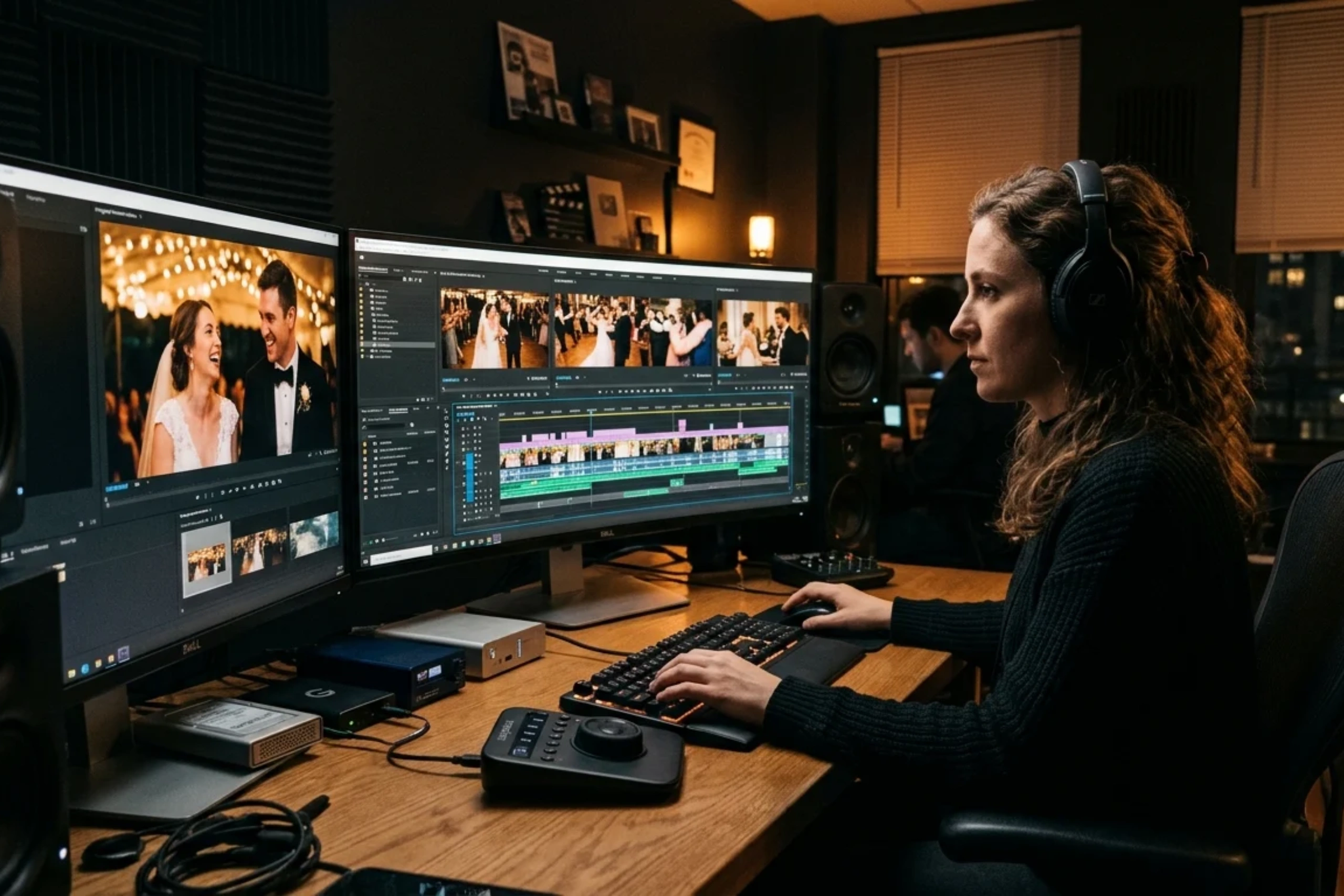
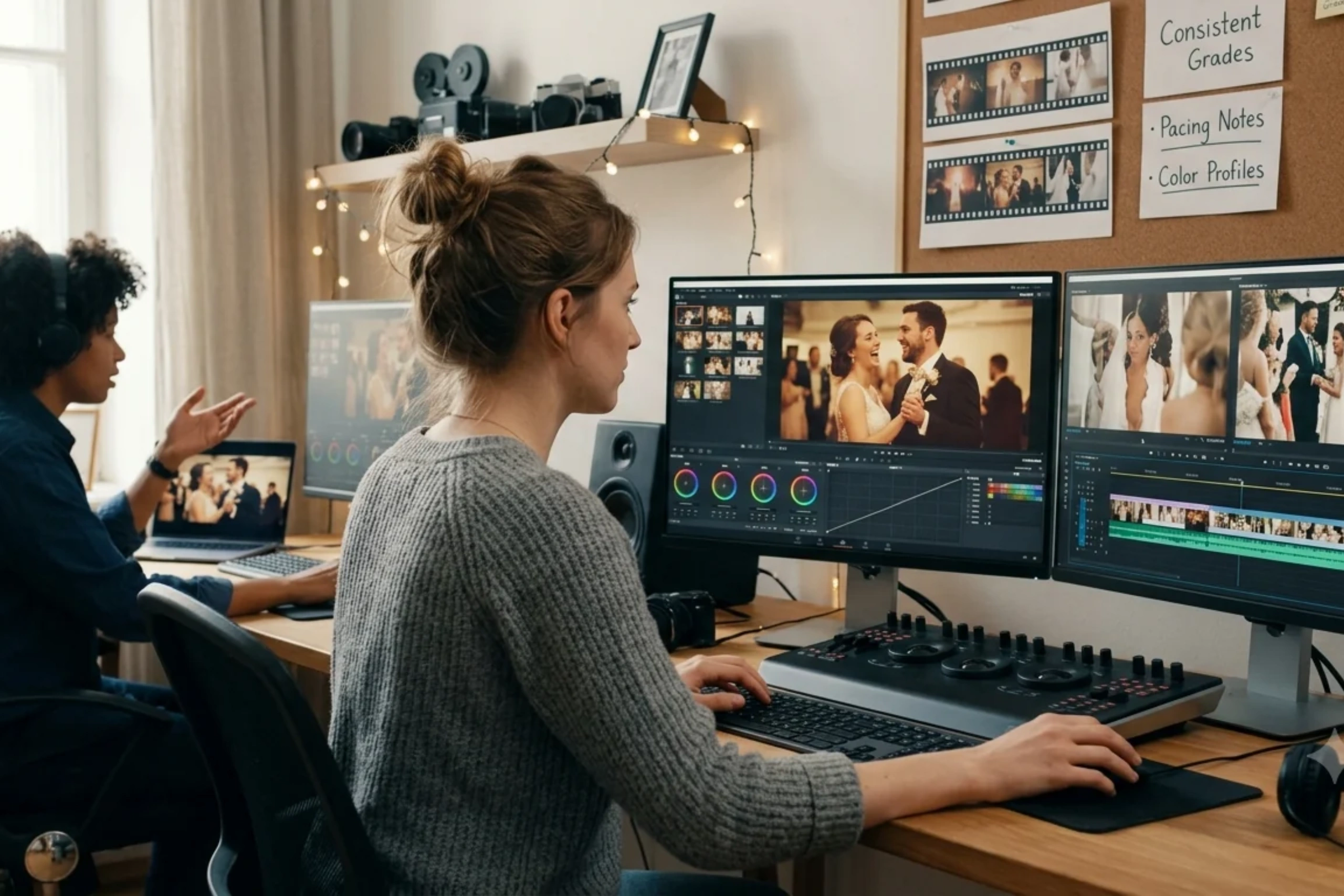
Every Videographer has an editing vision while shooting weddings. With time, it becomes their unique editing style. It can include cinematic color grading, emotional storytelling, music selection, or smooth transitions. It helps clients recognize your work and distinguishes your studio from competitors.
But as the season picks up and bookings increase, it becomes difficult to manage every post-production task internally. That is why many wedding videographers work with Motion Edits’ outsourced wedding video editing team to help manage workload. We maintain creative consistency, proper communication with videographers, and a structured workflow.
Here are some practical ways wedding videographers can protect their signature style while working with an external editing team.
Explore Our Wedding Video Editing
How to Work With A Wedding Film Editor
Create a Clear Wedding Film Editing Style Guide
Make a list of the unique aspects of your wedding films before assigning them. An external wedding video editor can better understand your creative preferences with help of an editing style guide.
It Includes:
- Preferred skin tones, contrast, saturation, and color grading.
- Pacing, emotional tone, and musical genres.
- Cutting methods and transition preferences.
- Shot selection and narrative structure.
- Preferred fonts, graphics, and titles.
- Dialog treatment and audio levels.
For example, if your signature style emphasizes warm cinematic visuals and emotional storytelling, provide examples that reflect these preferences.
Share Reference Films and Editing Examples
Although written instructions are helpful, visual aids are a better way to convey creative expectations.
- Give two or three finished wedding films that exemplify the editing style you like.
- Explain what you like about each reference. It might be the use of natural audio, the color treatment, the way vows are integrated into the highlight film, or the timing of poignant scenes.
- You can also give instances of edits you wish to stay away from. This makes it easier for the outsourced wedding film editing team to comprehend your preferences and constraints.
Instead of showing a collection in its entirety without context, focus on particular scenes and explain how they best represent your brand.
Establish Standard Footage Organization and Project Instructions
A well-planned project minimizes needless communication and increases the efficiency of wedding videography editing.
- Create a standard folder structure for camera recordings, external audio, music, drone footage, and other assets before moving any footage.
- Clearly mark camera angles and relevant details like frame rates, preferred audio sources, LUTs, and export requirements.
- Every project should include a brief outlining the couple’s history, significant events, unique requests, and deliverables.
This enables your wedding film editor to understand the creative direction.
Maintain Consistency Through Feedback and Quality Checks
Giving up creative control does not mean outsourcing.
- Before final delivery, studios can assess the first edit and offer targeted feedback through a structured review process.
- Describe the improvement rather than making generic remarks like make it more cinematic.
- Mention whether the music transition feels abrupt, the skin tones need to be adjusted, or a specific scene needs to be extended.
- You must create a quality-control checklist. It includes export settings, storytelling, color consistency, audio clarity, transitions, and branding.
It will help the wedding video editor understand your expectations before they start editing.
Start with a Trial Project
Start with a smaller editing assignment before assigning several weddings.
- This allows you to assess the team’s technical proficiency, communication skills, storytelling style, and adherence to your editing standards.
- Review the finished product in comparison to your reference films to determine what needs to be adjusted.
- Assign more projects gradually after you’ve become comfortable with the workflow.
This strategy keeps your studio’s creative identity while fostering a reliable working relationship.
Maintain Your Wedding Film Editing Style with Motion Edits
Outsourced wedding video editing services allow videographers to manage editing backlogs, handle seasonal workloads, and spend more time filming and developing. However, maintaining a signature style necessitates clear guidelines, relevant references, well-organized footage, and frequent quality checks.
Motion Edits supports wedding video editing for videographers and studios looking to improve post-production efficiency. You can collaborate with an external editing team while maintaining control over your wedding films by sharing your creative references and project requirements.
Explore Our Wedding Video Editing
FAQs
1. Can outsourced wedding video editing services match my studio’s cinematic style?
Yes, if you give an experienced editing team the right references, color-grading guidelines, editing instructions, and feedback, they can work in your preferred cinematic style. You can assess the team’s compatibility with a trial project.
2. Why is a wedding film editing style guide important?
Your studio’s creative preferences, including color grading, storytelling, transitions, music, typography, and audio treatment. It reduces repeated instructions and maintains visual consistency among wedding projects.
3. How can wedding videographers maintain their editing style when outsourcing?
By creating a thorough style guide, sharing reference films, giving clear project instructions, and setting up a feedback and quality-control process, wedding videographers can preserve their editing style.
4. What should I share with an outsourced wedding video editor before starting a project?
Share organized footage, reference films, LUTs, music, camera and audio details, export specifications, storytelling guidelines, and specifics of significant wedding moments. If you provide clear instructions, the editor can better understand your creative expectations.
5. How can wedding videographers ensure quality when working with an external wedding film editor?
Videographers should use a quality-control checklist, create clear project briefs, evaluate preliminary edits, and offer detailed feedback.