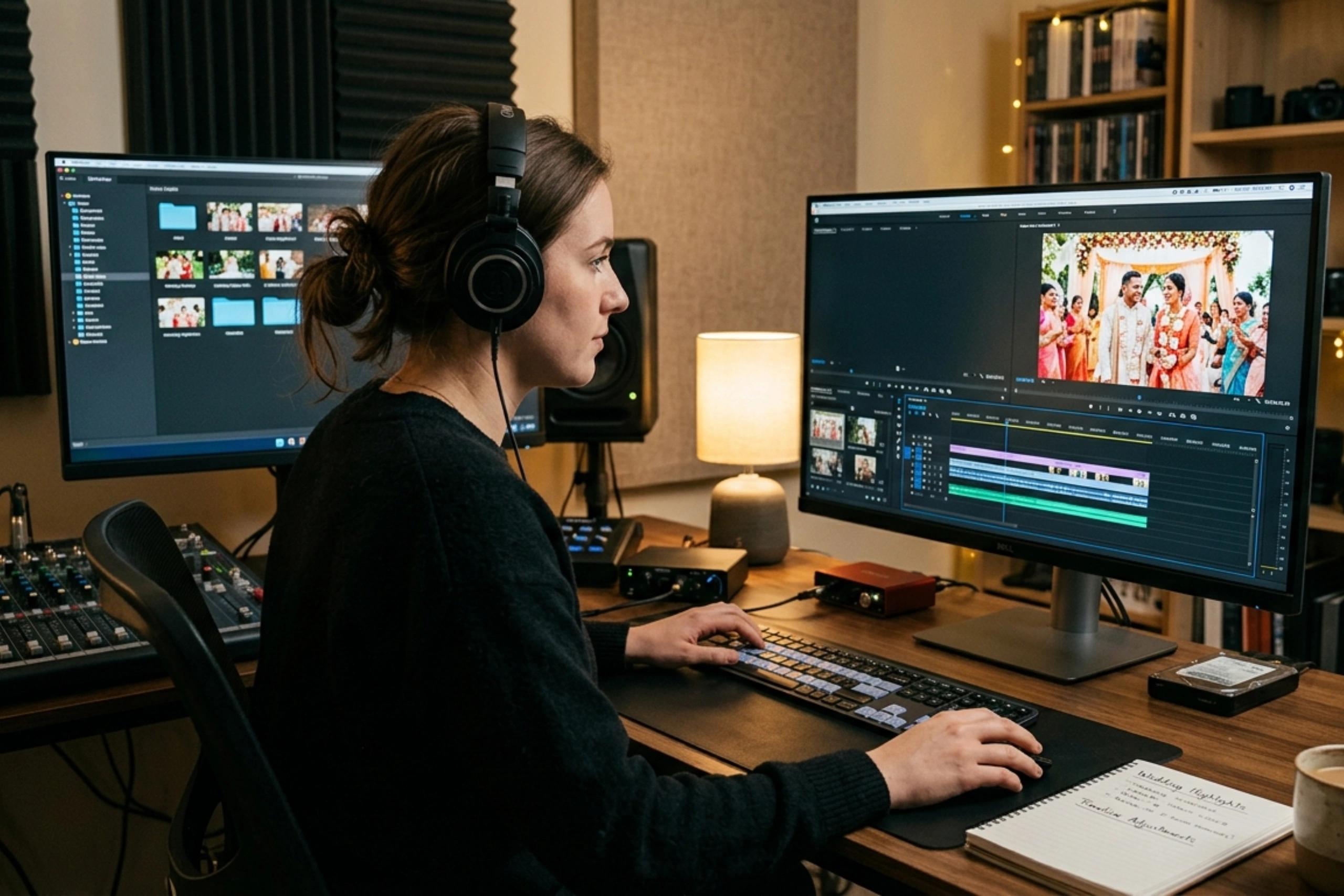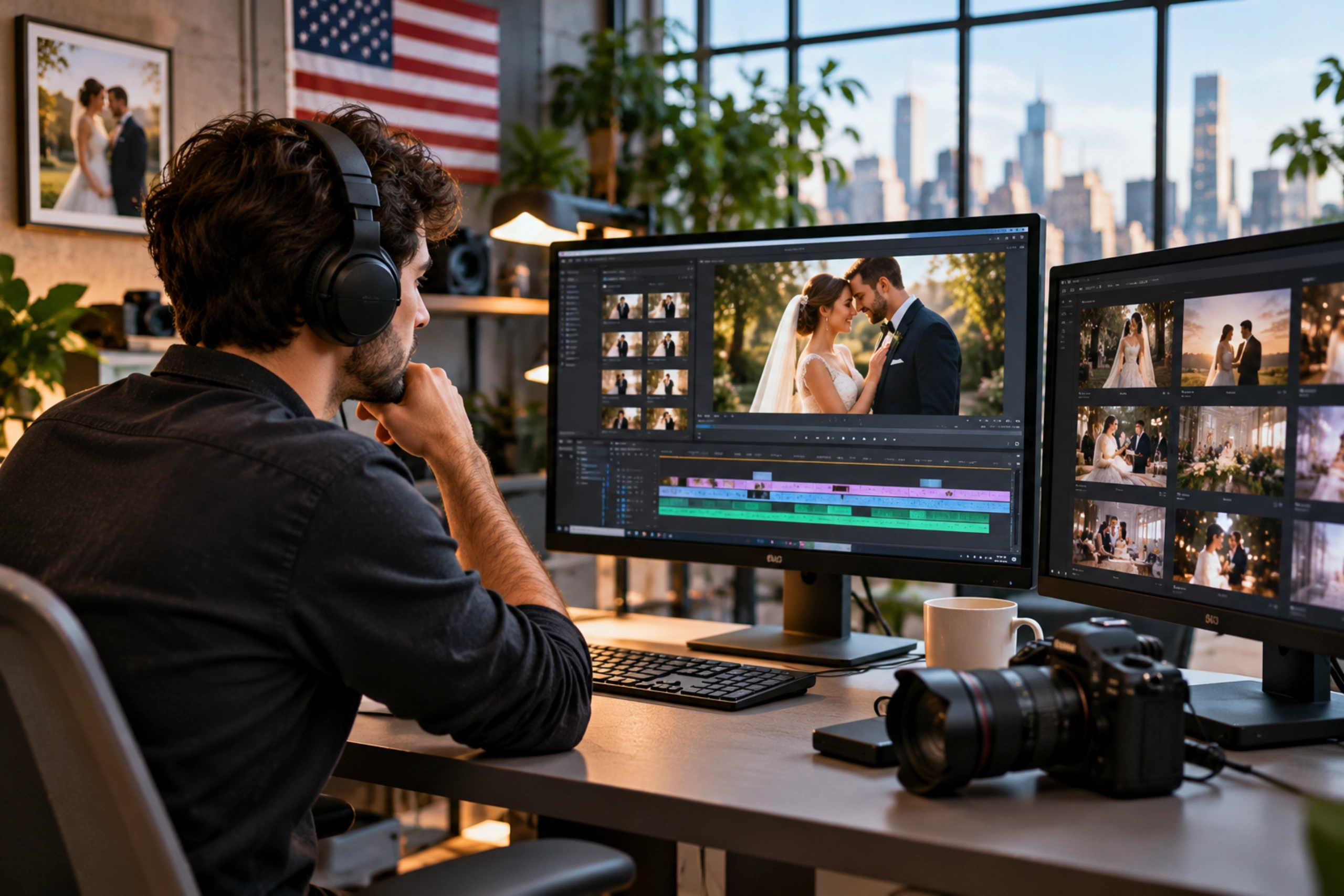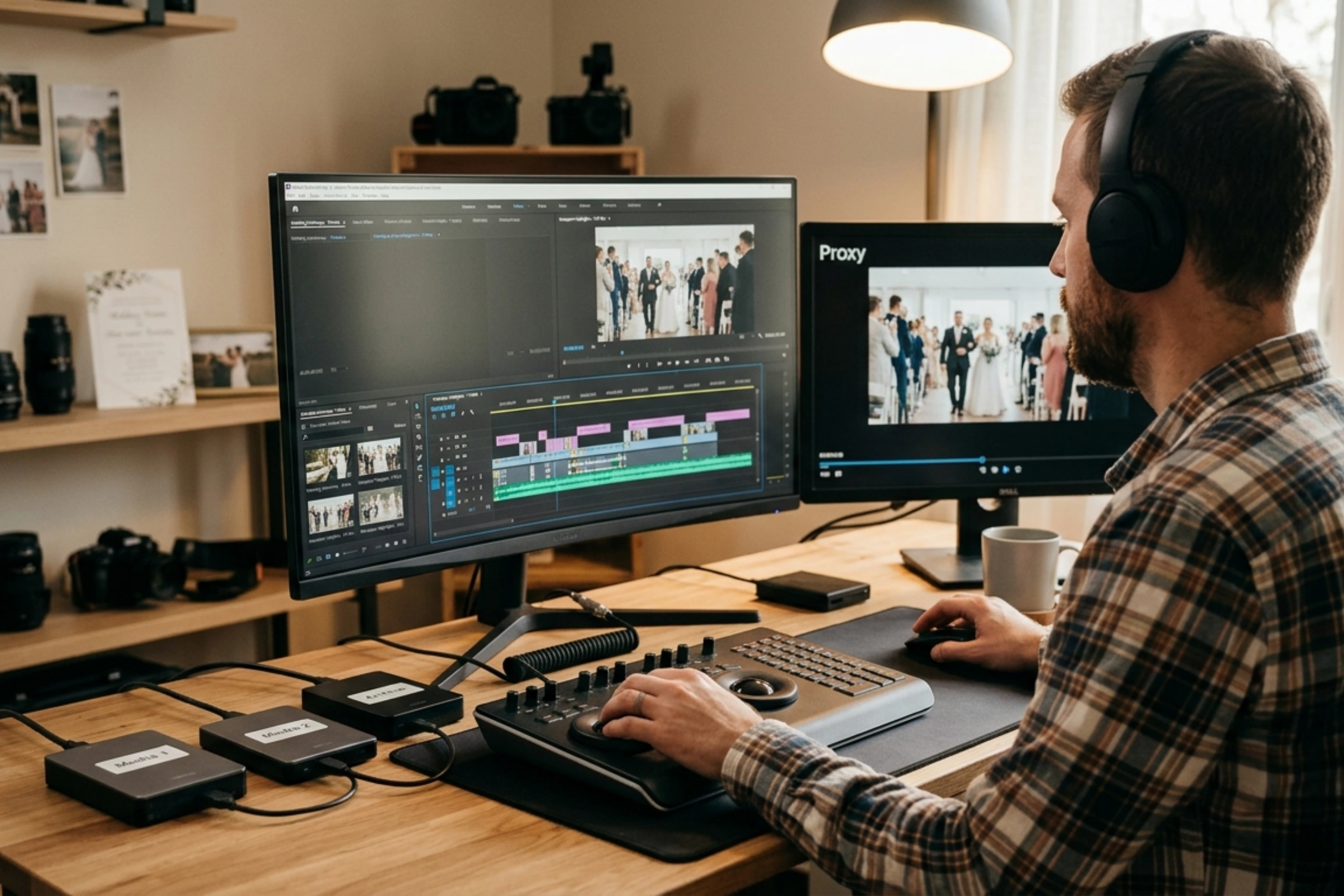
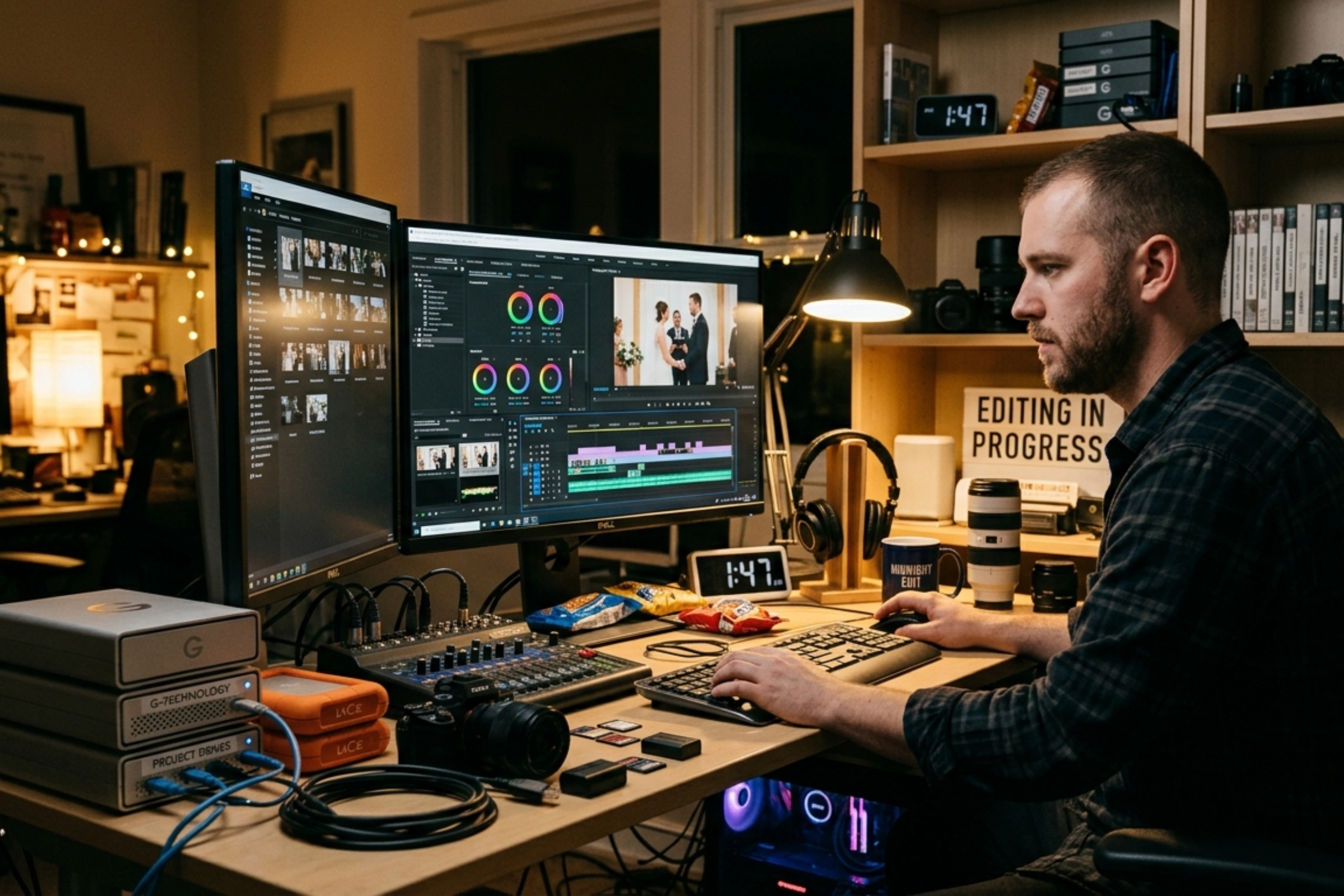
Wedding videographers often edit the wedding films by themselves or hire an in-house editor. For that, you need a professional setup. Once the wedding is filmed, it requires hours of post-production follow-up. It includes footage organization, multicamera synchronization, color grading, audio editing, storytelling, and final exports. Managing all these tasks in-house can become expensive and time-consuming for growing wedding studios in the United States. In-house wedding video editing goes beyond salary and includes equipment, software subscriptions, storage, training, and fluctuating workloads. It can also affect profitability.
That is why hiring a dedicated wedding video editor from Motion Edits is the best way to maintain creative control. Let’s compare both approaches to understand which makes more business sense.
Explore Our Wedding Video Editing
1. Staffing Costs: Full-Time Hiring vs. Flexible Editing Support
For an internal editor, regular pay, employee benefits when applicable, onboarding, training, and ongoing management are all necessary. Additionally, studios need to account for paid time off and when editing workloads are light.
Instead of keeping a permanent editing position, companies can pay for agreed-upon projects or deliverables with outsourced editing. This can be especially helpful for studios with seasonal booking patterns.
Business advantage: When more editing capacity is needed, outsourcing can lower fixed staffing commitments.
2. Equipment and Infrastructure Expenses
For professional wedding video editing, capable computers, GPUs, fast storage, backup systems, and dependable data transfer facilities are all necessary. Hardware and storage needs may rise when handling several 4K or 6K camera streams.
The studio must buy, maintain, and upgrade this infrastructure for an internal team. A large portion of the editing infrastructure is handled by the outside supplier when using outsourced wedding video editing services.
Business advantage: By increasing their editing capacity, studios can avoid making some additional hardware investments.
3. Software Subscriptions and Technical Expertise
Applications like Adobe Premiere Pro, DaVinci Resolve, and Final Cut Pro are frequently used by professional editors. Studios may also need asset subscriptions, color-grading resources, audio tools, and plugins, depending on their workflow.
Businesses require editors who are knowledgeable about multicamera synchronization, color matching, audio refinement, and cinematic storytelling in addition to software costs.
Without having to hire and train a new permanent employee, the studio can benefit from the specialized post-production skills of an experienced outsourced wedding film editor.
Business advantage: Gain access to editing knowledge without having to develop every technical skill on your own.
4. Managing Seasonal Workloads and Delivery Deadlines
Wedding bookings are rarely distributed evenly throughout the year. While slower times may result in the underutilization of full-time editing resources, busy times can lead to editing backlogs.
The capacity of an internal team is comparatively fixed. Through outsourcing, studios can assign specific projects to an outside team, including highlight films, teasers, ceremony edits, and vertical reels.
Business advantage: Greater adaptability to handle varying project volumes and predetermined client deadlines.
5. Time Management and Business Growth
Videographers have less time for client consultations, marketing, networking, and scheduling new weddings when they devote the majority of their working hours to post-production.
Studio owners can concentrate on revenue-generating activities by outsourcing some wedding videography editing tasks to an outside team.
For instance, while an outside editor works on multicamera synchronization, cinematic highlights, and wedding movie editing, a videographer can oversee filming and client relations.
Business advantage: More time to grow the company rather than personally overseeing each post-production phase.
In-House vs. Outsourced Wedding Video Editing: Quick Comparison
| Business factor | In-house editing | Outsourced editing |
| Staffing | Regular employment costs | Project-based or agreed pricing |
| Equipment | Studio purchases and maintains hardware | Provider manages its editing setup |
| Software | Studio manages subscriptions | Provider manages its software |
| Workload | Limited by internal capacity | Additional capacity when needed |
| Expertise | Requires hiring and training | Access to an external editing team |
| Scalability | May require additional hiring | Can scale through agreed project volumes |
| Creative control | Direct internal supervision | Maintained through briefs, references, and feedback |
Is Outsourcing the Right Choice for Your Wedding Studio?
Not every studio will benefit from outsourcing. In-house production might be more appropriate if you have a steady workload, a well-established editing team, and a robust internal workflow.
However, outsourcing merits careful consideration if hiring costs are rising, editing backlogs are impacting client deliveries, or you wish to take on more bookings without growing your permanent staff.
Examine a provider’s portfolio, data security procedures, revision guidelines, communication style, and turnaround promises before selecting one. To assess editing quality and creative compatibility, start with a few projects.
Scale Your Wedding Video Editing with Motion Edits
Managing an in-house editing department may necessitate significant investments in personnel, equipment, software, and time. Motion Edits provides professional wedding video editing services to wedding videographers and studios seeking dependable post-production support.
From multicamera editing and cinematic highlights to teasers, social media reels, and full-length wedding films, our team assists studios in meeting editing requirements while maintaining creative direction.
If you want to reduce post-production stress and focus on filming and growing your business, consider outsourced wedding video editing with Motion Edits.
Explore Our Wedding Video Editing
FAQs
1. Is outsourcing wedding video editing cheaper than hiring an in-house editor?
Because outsourcing eliminates the need for additional infrastructure and permanent staff, it may be more economical for studios with varying workloads. The volume of the project, the complexity of the editing, the need for revisions, and the cost of the services all affect the actual savings.
2. What are the hidden costs of in-house wedding video editing?
Editor salaries, employee perks, computer upgrades, GPUs, storage systems, software subscriptions, plugins, maintenance, training, and backup infrastructure are examples of hidden costs. As the studio takes on more wedding projects, these costs may go up.
3. Can outsourced wedding video editors maintain my studio’s editing style?
Yes. Using reference films, LUTs, music preferences, editing briefs, and feedback, professional outsourced editors can follow the creative direction of a studio. Maintaining visual consistency across projects is facilitated by a well-defined onboarding procedure.
4. When should a wedding videography business consider outsourcing editing?
When editing backlogs impact delivery schedules, internal resources become overburdened, or business owners wish to take on more bookings without hiring more full-time editors, a studio should consider outsourcing.
5. What wedding video editing tasks can studios outsource?
Multicamera synchronization, footage selection, color grading, audio editing, full-length wedding films, teasers, and social media reels can all be contracted out by wedding studios. The editing provider determines the services that are offered.