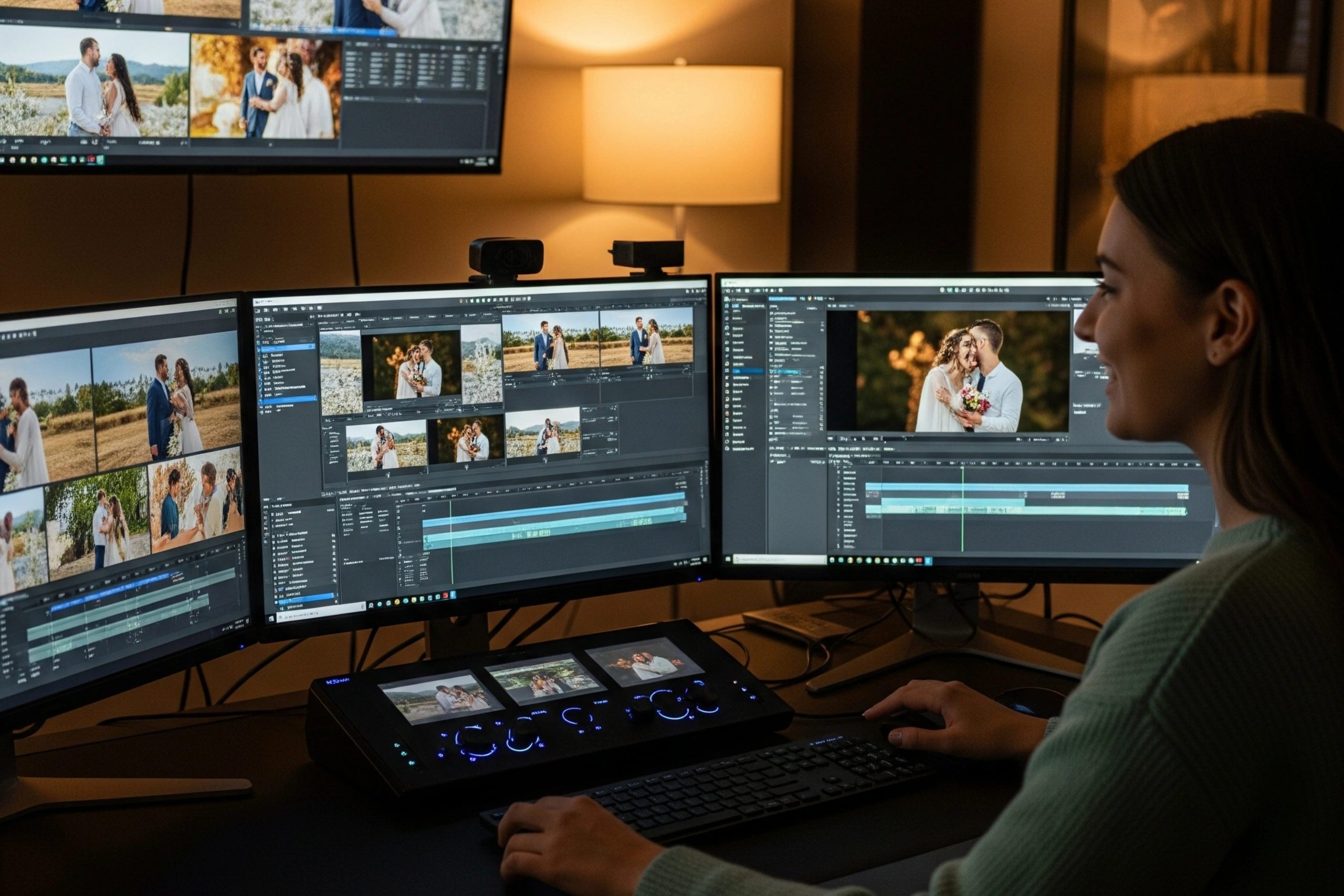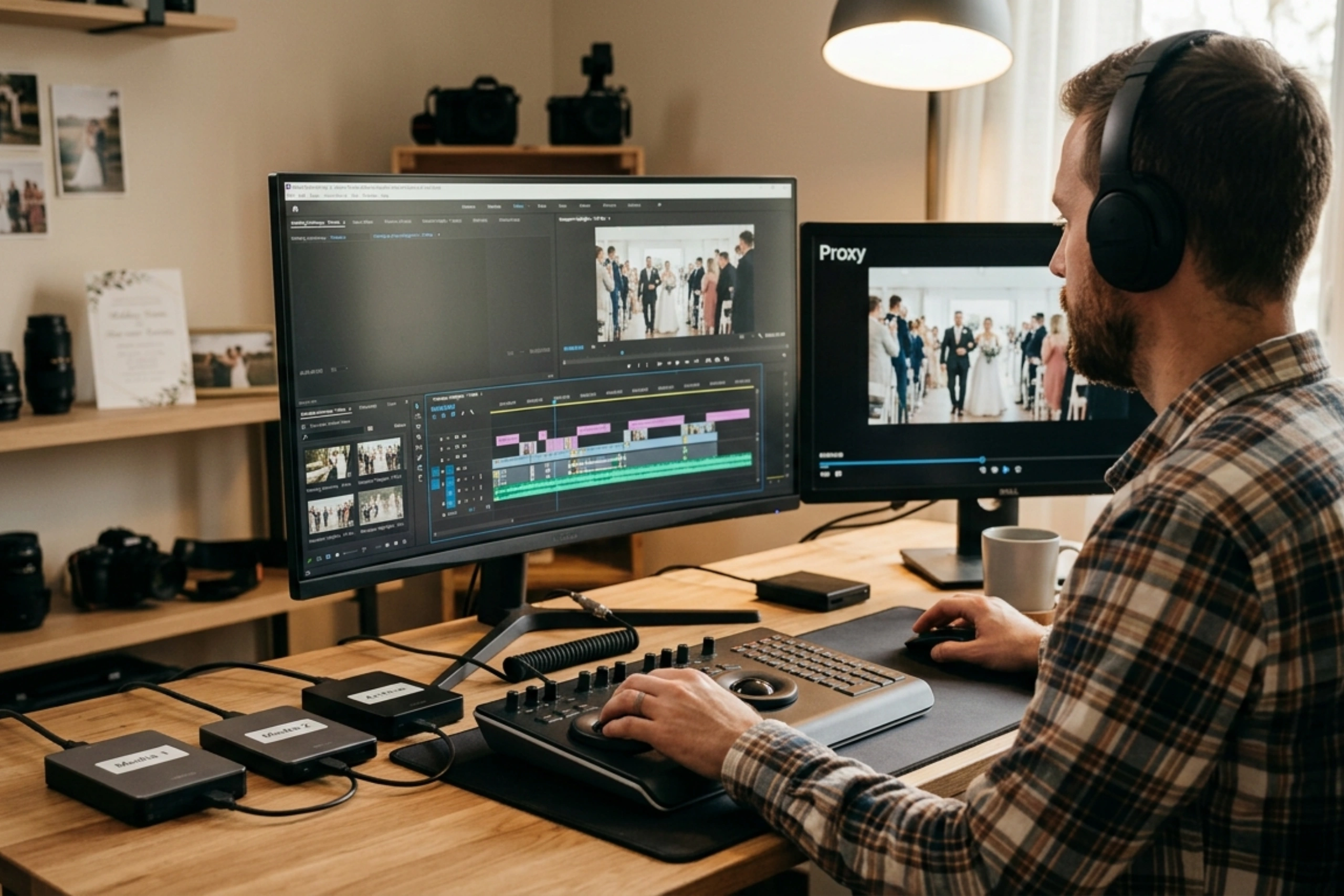
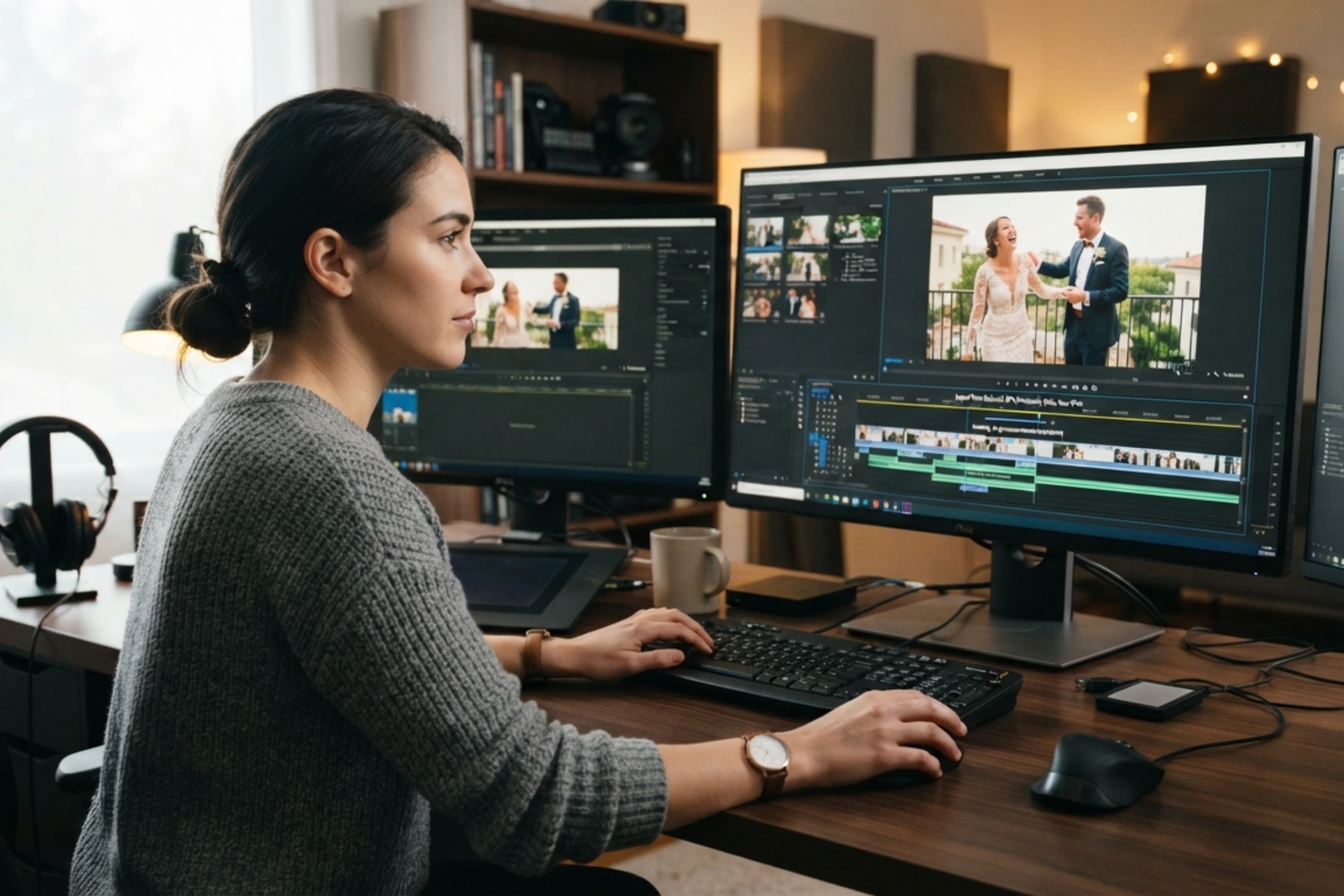
Editing is a whole different level of tasks after everything is imagined, shot, and it’s time for execution. Plus, it doesn’t end when the timeline is finished. The real challenge began when the project was encoded, compressed, and prepared for delivery. The final stretch of wedding video editing often happens during export. It can quietly add hours to every wedding film if the rendering process is slow, unstable, or inconsistent.
This issue was evident to us at Motion Edits. Exports continued to impede delivery, but editors were finishing the creative portion of the project on schedule. Even if a wedding film has undergone extensive editing, color grading, and internal approval, the export process would still take longer than it should. When you multiply that by the number of weddings during the busiest time of year, export inefficiency turns into a true production bottleneck.
So we rebuilt that part of the workflow.
Motion Edits cuts export time by 35% for a significant percentage of its wedding projects by standardizing render presets for various delivery formats, optimizing export settings for wedding films, and matching render workflows with project type. More significantly, the system decreased re-exporting, increased consistency, and enabled editors to produce work more quickly without sacrificing visual quality.
Check Our Wedding Video Editing Service
Why Export Time Matters More Than Videographers Think
Export is typically regarded as the last click in studios, something you do after finishing the “real” editing. However, export settings have a direct impact on upload time, file quality, delivery speed, and even revision cycles in professional wedding videography editing.
There is rarely a single result from a modern wedding project. A full ceremony edit, Instagram teaser reels, a vertical social cut, a client-delivery version optimized for cloud download, and a cinematic highlight film are all possible requirements for a videographer. Editors lose time and are more likely to make mistakes if each of those outputs is rendered using a different manual setup.
That’s precisely what occurs in a lot of expanding studios. An excessively high bitrate is exported by one editor. Another person overlooks the proper teaser reel frame size. The client-delivery file is too big to download easily, so a third party must re-export. Even though none of these issues are innovative, they nevertheless cause delivery delays. Export workflow is more than just the technical final product for a professional wedding video editor; it’s a component of the business system.
The Problem Motion Edits Identified in Its Workflow
Motion Edits noticed a recurring pattern before optimizing render presets. The export stage was still inconsistent, but editors were effectively managing multi-camera wedding timelines, color correction, audio cleanup, and storytelling. Because settings were being manually changed based on habit rather than a studio-wide system, some projects rendered quickly while others took much longer.
Due to the weight of contemporary wedding films, this was significant. Multiple camera 4K footage, drone footage, slow-motion shots, layered audio, adjustment layers, and color grading throughout the entire timeline can all be included in a single project. Render times can be significantly increased by inefficient settings once the complexity reaches the export stage.
Speed wasn’t the only problem. Additionally, inconsistent presets led to preventable issues like large files, sluggish uploads, and needless re-renders. These delays quickly mount up for a team that provides wedding video editing services, particularly during the hectic wedding months when numerous projects are in line for delivery.
What Optimized Render Presets Actually Changed
By eliminating needless variability, Motion Edits approached export in the same manner that it approaches editing systems. The team created standardized render presets based on typical wedding deliverables rather than handling each export as a unique task.
A 60-second teaser reel or a vertical Instagram cut, for instance, requires different export settings than a full cinematic wedding film. The bitrate, resolution, codec, and delivery platform requirements vary for each output. Following the mapping of those patterns, Motion Edits produced pre-established categories that editors could use immediately based on the kind of project.
This resulted in a faster handoff from timeline to final delivery, more consistent file sizes, and fewer manual decisions during export. Every time an editor exported a wedding project, they were no longer required to reconsider technical settings. With the render stage already optimized, they could concentrate on completing the movie.
That’s a significant change for a wedding film editor. Instead of being a last-minute technical obstacle, export becomes a controlled part of the workflow.
How the 35% Export Time Reduction Happened
There was more than one setting that contributed to the decrease. It resulted from combining several useful optimizations.
1. Instead of using default software settings, Motion Edits matched export presets to actual delivery requirements. Many default export templates are either not optimized for the platforms that videographers use most frequently, or they are too heavy for wedding delivery. The team removed needless processing overhead by creating presets especially for client downloads, social teasers, and highlight films.
2. By standardizing bitrate and format choices, the team decreased re-exporting. Rendering a stunning film in a format that is either too large for the client or too compressed for the videographer’s quality standards is a frequent problem in outsourced wedding video editing. This back-and-forth is greatly reduced when presets are pre-approved and tested.
3. Export presets were incorporated into a more comprehensive post-production process that featured platform-specific delivery standards, streamlined timelines, and ordered sequences. To put it another way, export optimization was successful because it was integrated into the entire editing process rather than being handled as a stand-alone solution.
Faster average export times, fewer delivery-stage errors, and more consistent project turnaround were measurable outcomes.
Why This Matters for Wedding Videographers Running a Business
The greatest benefit of optimized render presets for independent filmmakers and expanding studios goes beyond simply saving a few minutes at the conclusion of a project. It involves creating a scalable workflow.
Inefficient exports are annoying if you deliver only 10 wedding projects in a season. Time that could have been spent on filming, client correspondence, revisions, or new bookings is lost for every additional hour spent waiting to verify file sizes, re-exporting incorrect versions, or renders.
For this reason, more Videographers and studios are collaborating with professional wedding video editors. It goes beyond simply cutting clips more quickly and involves developing systems that lower friction throughout the entire workflow, from ingest to final export.
For videographers who wish to grow without missing deadlines or sacrificing quality, this is particularly crucial. That is why Motion Edits is beneficial, since it views wedding editing as an operational pipeline.
Render Presets Are a Small Detail with a Big Impact
The visible aspects of the craft, such as camera movement, transitions, color grading, pacing, and storytelling, are frequently the focus of wedding filmmakers. That’s all important. However, secret workflow enhancements are frequently what increase a studio’s sustainability.
One of those unnoticed enhancements is render presets. They don’t directly alter a wedding film’s emotional content, but they do alter how smoothly it progresses from the final schedule to the final product. And the impact is substantial when that occurs across dozens of projects.
The bigger takeaway for videographers is that workflow optimization doesn’t always appear dramatic. Sometimes it appears as a cleaner delivery process, quicker uploads, and fewer export failures. However, during peak season, those are the systems that safeguard both your turnaround time and your sanity.
How Motion Edits Fits into That System
Motion Edits provides more than just editing assistance. It’s developing post-production tools to improve the productivity of wedding videographers. This covers everything from export optimization and delivery standards to timeline organization and proxy workflows.
That kind of assistance is important for videographers who are managing several weddings, social deliverables, and client expectations. Beyond simply assembling footage, a skilled wedding film editor should assist in removing the obstacles that impede your company’s progress.
Motion Edits are helpful in this situation. Delivering polished wedding films is not the only objective. The goal is to establish a workflow that will enable those films to be delivered reliably, effectively, and without the last-minute chaos that frequently accompanies the busiest wedding season.
Conclusion
Although a 35% reduction in export time might seem like a technical advancement, wedding videographers actually benefit financially from it.
Faster exports translate into quicker delivery. Less time is lost when there are fewer renders. Every wedding film will be more consistent with better presets. Additionally, studios can scale with less stress when those improvements are incorporated into a larger editing system.
The key lesson to be learned from Motion Edits‘ workflow is that intelligent wedding videography editing involves more than just what takes place on the timeline. It also concerns what transpires after the timeline is completed.
Those behind-the-scenes systems are just as important to aspiring videographers as the finished product.
Check Our Wedding Video Editing Service
FAQs
1. How can a wedding video editor reduce export time without lowering quality?
By utilizing optimized render presets, platform-specific bitrate settings, cleaner timelines, and delivery templates made for wedding film workflows, a professional wedding video editor can shorten export times.
2. What export settings work best for wedding video editing projects?
The output determines the optimal settings. Depending on the codec, bitrate, frame size, and delivery platform, different export presets are required for full wedding films, teaser reels, and vertical social edits.
3. Why do wedding film exports take so long in Premiere Pro or DaVinci Resolve?
Heavy 4K timelines, numerous layers, color grading, stabilization, effects, and ineffective render settings are the main causes of long export times. This can be made even slower by export presets that are not optimized.
4. Does outsourced wedding video editing include export optimization too?
Yes, to ensure that videographers receive client-ready files more quickly and reliably, robust outsourced wedding video editing support should include export optimization, delivery formatting, and preset-based workflows.
5. How do wedding videographers build a faster delivery workflow?
A system with well-organized footage, proxy editing, multi-cam syncing, clean timelines, consistent color workflows, and optimized render presets for each deliverable typically results in faster delivery.